

About 90% of headaches are classified as tension-related. Stress, poor posture, changes in sleep, and missed meals can contribute to headaches, while tension headaches often feel like a dull ache or pressure around the forehead, sometimes with tenderness in the neck or shoulders. Knowing what may be behind the discomfort can make it easier to understand the options available in Bellevue.
Recurring head pain can affect your focus, energy, and daily routine, especially when the triggers aren’t clear. This article explains common headache causes, how tension headaches differ from other types, and what a careful evaluation may involve. It also covers how natural, non-surgical care may fit into a broader approach to understanding headaches and supporting nervous system function.
What causes headaches?
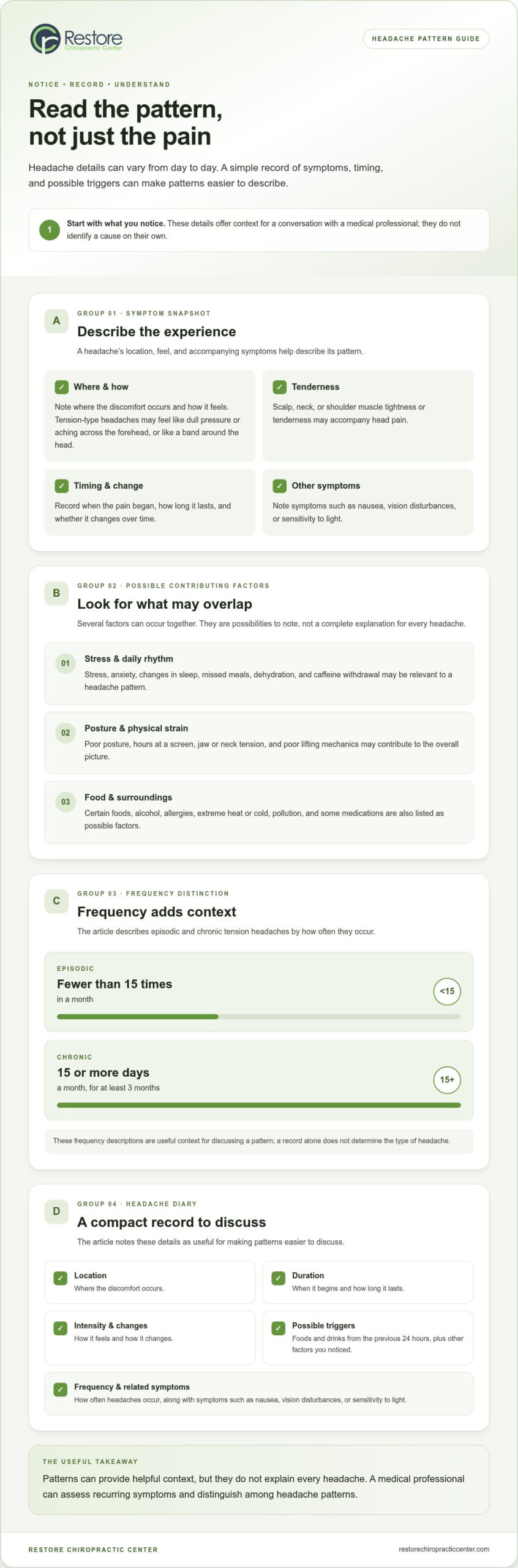
Tension headaches are a common type of headache, often felt as dull pressure across the forehead or around the center of the head. Tightness or tenderness may also involve the scalp, neck, or shoulder muscles. Stress can contribute, but headache pain has several possible causes, so the pattern matters. Understanding those patterns can help frame questions about tension headache treatment in Bellevue.
During stressful periods, people may tense their jaw, neck, or shoulders without noticing. Anxiety can also affect sleep and routines, which may influence headache patterns. Stress-related tension is one possible factor, not a full explanation for every headache. Migraines, for example, are a different type, and symptoms vary. Understanding the difference can help when considering tension headache treatment in Bellevue.
Other possible causes or triggers include allergies, dehydration, poor posture, sleep changes, missed meals, certain foods, alcohol, and caffeine withdrawal. Extreme heat or cold, pollution, some medications, and poor lifting mechanics may also play a role. These factors can overlap: a skipped lunch, a short night of sleep, and hours at a screen may occur together. A headache diary can help track the location, duration, intensity, and possible triggers, including food and drinks from the previous 24 hours.
Lifestyle changes and stress management can help you notice patterns and build steadier routines. Options include consistent sleep and meals, posture awareness, and relaxation practices. Mindfulness-based stress reduction uses techniques such as guided breathing and body scans to focus attention on the present. Deep breathing, biofeedback, and behavior therapies can help people cope with tension-type headaches. Aspirin and other pain relievers address pain, not its underlying causes, and repeated use can contribute to medication-overuse headaches. A medical professional can assess recurring symptoms and distinguish among headache patterns.
How are headaches evaluated?
A headache evaluation considers symptoms, their pattern, and possible causes. For a primary headache, the person’s history and symptom details help distinguish among types.
Headache Evaluation and Diagnosis
A medical professional may ask when the pain began, where it occurs, how long it lasts, and whether it changes. Nausea, vision disturbances, and sensitivity to light can help describe the headache. Keeping a headache diary makes patterns easier to discuss, particularly when symptoms are chronic or vary from day to day.
An evaluation may also include physical and neurological assessments. Neck and shoulder tenderness, range of motion, and posture provide useful context, as muscle tightness may accompany head pain. These findings can help a specialist consider whether the pattern fits a primary headache or needs further medical assessment. A severe headache with new vision disturbances must be considered in the context of the full symptom pattern. A tension-type label alone cannot determine urgency.
Imaging During Headache Evaluation
Imaging isn’t necessary for every headache. A healthcare professional may consider MRI or CT imaging when the history or examination raises concern about a secondary cause. MRI uses magnetism, radio waves, and computer technology to create brain images rather than X-rays. CT uses a rotating X-ray beam to create cross-sectional images.
The choice depends on the clinical question and symptoms, not simply on headache pain. Imaging can help assess possible causes, but a scan alone doesn’t explain every headache pattern. Neck and shoulder findings may also help determine whether further evaluation or therapy is relevant. A clear record of symptom changes, posture, and related disturbances can make an assessment more focused.
What causes headaches?
Headaches can occur when pain-sensitive structures become active, including nerves around the skull and muscles in the head and neck. Tension-type headaches often feel like dull pressure or aching. The discomfort may spread across the forehead or feel like a band around the head, sometimes with muscle tenderness.
Stress is a common contributor to tension headaches. During a demanding day, someone might unconsciously tighten their jaw or neck muscles for hours. Anxiety and disrupted sleep can add to the strain. These patterns may explain why headaches sometimes accompany stressful periods, though stress isn’t the only possible cause.
Frequency offers another useful distinction. Episodic tension headaches occur fewer than 15 times a month. They’re considered chronic when they happen 15 or more days a month for at least three months. Recording when headaches occur can help reveal whether the pattern is occasional or persistent, rather than relying on memory alone.
Headaches don’t all have the same source. Primary headaches arise from activity in pain-sensitive structures, while secondary headaches are triggered by another condition. Possible secondary causes include sinus or ear infections, dehydration, and anxiety disorders. Headache patterns also differ from migraines, so noting accompanying symptoms and how the discomfort changes over time can provide useful context for a medical discussion.
Restore Chiropractic Center: Upper cervical chiropractic
Restore Chiropractic Center offers upper cervical chiropractic care for people exploring natural options for headaches. A first-visit consultation and chiropractic examination include time to discuss symptoms, health history, and relevant findings. This can help clarify whether the approach fits your concerns.
The clinic’s knee chest upper cervical approach focuses on the relationship between the upper neck and nervous system function. If you have recurring headaches, discuss how they affect your daily activities and what the evaluation involves. Chiropractic care does not replace medical assessment when symptoms call for it. A licensed medical professional can evaluate concerns outside chiropractic care.
To learn more or arrange a conversation, contact Restore Chiropractic Center.
Take a thoughtful next step
Understanding your headache pattern can make conversations about care more focused. If you’re considering natural options for tension headache concerns in Bellevue, Restore Chiropractic Center provides upper cervical chiropractic care, including knee chest upper cervical care. Chiropractic examinations and evaluations offer a starting point to discuss your symptoms and relevant findings.
You deserve care that takes your experience seriously and explains each step clearly. Bring questions about how headaches affect your day, what you’ve noticed about their pattern, and what an evaluation involves. These conversations can help you decide whether the approach fits your needs alongside any medical care you receive.
Contact Restore Chiropractic Center to learn more about its approach. Taking an informed next step can help you move forward with greater clarity.
Frequently Asked Questions
What approaches may help with tension headaches?
Care options depend on headache patterns, symptoms, and health history. A medical professional may discuss pain-relieving or preventive medicines, while non-medication approaches can include relaxation practices or physical therapy. Headache frequency and effects on daily activities also matter. Keeping notes about symptom changes can make care discussions more focused and informative.
Can physical therapy, massage, acupuncture, or relaxation help?
These approaches may help some people manage tension-type headache pain. Physical therapy can involve stretching, strengthening, and posture training; massage may ease tight muscles around the head, neck, and shoulders. Acupuncture may offer temporary relief from chronic headache pain. Deep breathing, biofeedback, and behavior therapies can support coping. Their relevance depends on symptoms and the person’s broader care plan.
How can recurring tension headaches be prevented?
Prevention can start with noticing what tends to happen before a headache. Record whether symptoms follow disrupted sleep, a missed meal, or extended screen time. A diary of headache days and possible triggers can reveal patterns to discuss with a healthcare professional. Consistent routines and stress-management practices may also support prevention.
Which Bellevue-area clinic provides headache-related chiropractic care?
Restore Chiropractic Center provides upper cervical chiropractic care for patients in Bellevue, Nebraska, and the Omaha metropolitan area, including Ralston, La Vista, Boys Town, Papillion, St. Columbans, Carter Lake, Council Bluffs, and Offutt Air Force Base. Chiropractic examinations and evaluations provide an opportunity to discuss headache concerns and relevant health history. The clinic’s care focuses on upper cervical adjustments and is not a substitute for medical assessment.
Do Bellevue clinics offer same-day or urgent appointments for headaches?
Appointment timing varies by clinic. Restore Chiropractic Center accepts appointment requests by phone or through its online request form, but same-day availability isn’t established here. Its chiropractic services aren’t emergency medical services. For headache concerns that need medical assessment, a licensed medical professional can evaluate symptoms and discuss appropriate care. A chiropractic appointment should not replace that assessment when it’s needed.
Disclaimer
The information in this article is provided for educational purposes only and is not intended to diagnose, treat, cure, or prevent any condition. It should not replace professional medical advice. Always seek the guidance of a qualified healthcare provider with any questions regarding your health.


