

A C2 atlas adjustment doesn’t necessarily involve a dramatic neck movement, and the sensation can vary from person to person. It’s understandable to wonder whether it will hurt, especially if you’re already dealing with headaches, migraines, or vertigo. Knowing what an upper cervical evaluation involves can make the process feel less uncertain.
This guide explains what an adjustment may feel like, how radiographs can help assess alignment, and how the atlas, or C1, relates to C2. These bones have distinct roles, but they work together in the upper neck to support and move the head. You’ll also learn why radiographs are considered alongside an exam, rather than as a complete picture on their own. The aim is to give you clear, practical information about what may happen during an evaluation while recognizing that each person’s experience and findings are different.
How do I know if I have an upper cervical misalignment?
Symptoms and posture can raise questions about upper cervical alignment, but they can’t confirm a misalignment. An assessment considers your symptom history alongside movement and examination findings.
Symptoms Attributed to Atlas Misalignment
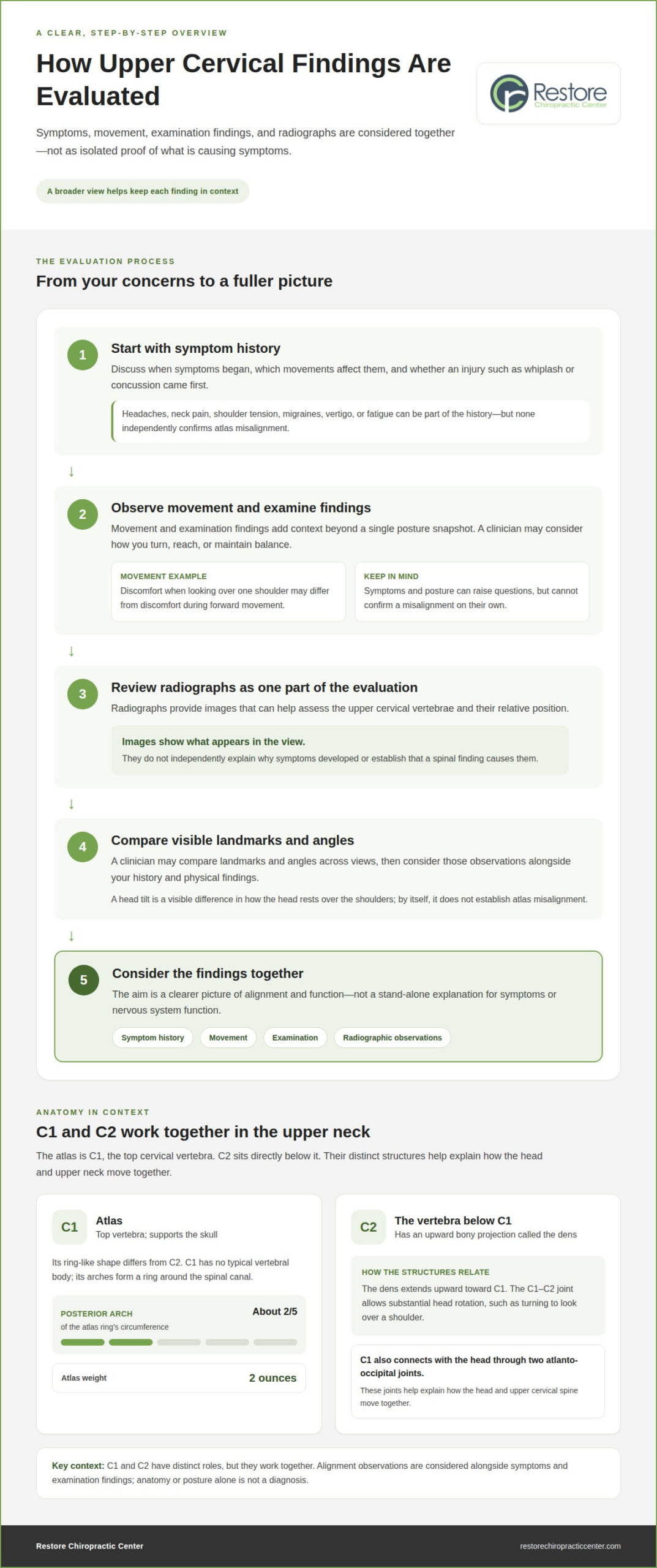
Headaches, neck pain, or shoulder tension may lead someone to ask whether the atlas is involved, but these symptoms have multiple possible explanations. A clinician considers when symptoms began, which movements affect them, and whether a whiplash injury or concussion came first. A migraine pattern may differ from soreness linked to neck movement. Symptoms after a collision form part of the history, not proof of a specific vertebral position. Information about concussion and post-concussion symptoms helps frame why that history matters.
Spinal Compensation and Related Symptoms
Spinal compensation describes movement changes elsewhere as a person protects an uncomfortable area. During an assessment, a clinician may consider how you turn, reach, or maintain balance rather than rely on a single posture snapshot. For example, discomfort when looking over one shoulder differs from discomfort during forward movement. Comparing these patterns can help describe function, but it does not identify the atlas as the cause.
Potential Symptoms and Benefits
Migraines, vertigo, and fatigue may be part of your symptom history, but none independently confirms atlas misalignment. An examination considers reported symptoms alongside physical findings and clarifies what the assessment shows. This helps inform a discussion about whether upper cervical care fits the findings and your goals. Separating symptom awareness from diagnosis avoids assuming that an adjustment will resolve symptoms or change nervous system function.
Radiographic measurement of spinal misalignments
Radiographs provide images that can help assess the upper cervical vertebrae and their position. They are one part of an evaluation, not proof that a spinal finding causes symptoms.
Head Tilt and Atlas Misalignment
Head tilt describes a visible difference in how the head rests over the shoulders; it does not establish atlas misalignment. A person may hold their head at an angle because of discomfort, movement habits, or other factors. During an assessment, a clinician considers head position alongside symptoms, movement, and radiographic findings. This broader view matters because one visible sign cannot explain every case of chronic neck pain or headaches.
Calibrating the C2 Atlas Zero Point
The atlas is the C1 vertebra, while C2 is the vertebra directly below it; neither has a device-style “zero point” to calibrate. In chiropractic imaging, radiographs may be reviewed for the relative position of these vertebrae. If “C2 Atlas” refers to a grinder or other equipment, its calibration is unrelated to spinal measurement. The term shouldn’t be taken as a patient instruction for adjusting the neck.
Radiographic assessment uses images to examine spinal position and possible misalignments. A clinician may compare visible landmarks and angles across views, then consider those observations alongside your history and physical findings. The aim is a clearer picture of alignment, not a stand-alone explanation for nervous system function or symptoms.
An injury, including whiplash, may be part of the history considered, but it does not by itself establish the cause of an alignment finding. Claims that a particular misalignment causes headaches, shoulder discomfort, or other symptoms require careful interpretation. Images show what appears in the view; they do not independently explain why symptoms developed or whether upper cervical care will change them.
Atlas (C1) anatomy and its relationship to C2
The atlas, or C1, is the top vertebra of the cervical spine and supports the skull. Its ring-like shape differs from C2, the vertebra directly below it. The atlas connects with the head through two atlanto-occipital joints, which help explain how the head and upper cervical spine move together. These structures provide context for understanding alignment, not a diagnosis from posture alone.
C1 has no typical vertebral body; its arches form a ring around the spinal canal. The posterior arch makes up about two-fifths of the atlas ring’s circumference, and the atlas weighs 2 ounces. C2 has a bony projection called the dens, which extends upward toward C1. Together, these distinct structures support head movement and balance in the upper neck.
The joint between C1 and C2 allows substantial head rotation, such as turning to look over a shoulder. The design also means that a discussion of C1 alignment should account for C2’s position, rather than treating either vertebra as isolated. Stress, posture, and movement may affect how patients describe neck comfort, but those experiences alone don’t establish a structural problem.
In cervical chiropractic care, “correction” refers to an intended change in alignment, not proof that every patient needs one. Different techniques may assess the upper cervical spine in different ways, with anatomy helping explain what an image or examination describes. Understanding the C1-C2 relationship can make those findings easier to discuss. Explore upper cervical chiropractic care for more context on how this area is evaluated.
Restore Chiropractic Center
Restore Chiropractic Center can help clarify questions about C1 and C2 through chiropractic exams and evaluations. If headaches, neck discomfort, or uncertainty about radiographic findings have prompted questions, a first-visit consultation offers space to discuss your history and understand the assessment process. The practice provides upper cervical chiropractic, including knee chest upper cervical care, with attention to each person’s symptoms and examination findings.
An evaluation can help explain what images and physical findings show and how those observations relate to your concerns. It does not mean that a particular alignment finding explains every symptom or guarantees a specific result. The goal is to support an informed discussion of chiropractic care options and next steps.
For questions about an evaluation, contact Restore Chiropractic Center.
Make an Informed Next Step
Understanding a C2 atlas adjustment is a starting point, not a conclusion about what your symptoms mean. Your experience matters: which movements feel uncomfortable, how headaches affect daily routines, and what you hope to understand from an evaluation are useful details to discuss. Clear questions can help make a conversation about upper cervical care more relevant to your needs.
It’s also reasonable to want plain-language explanations of what an assessment can show and how its findings relate to your concerns. Keep the focus on understanding your options and making informed decisions that fit your circumstances. Care should be discussed without assuming that one spinal finding explains every symptom or guarantees a particular result.
If you’d like to discuss your questions with the practice, contact Restore Chiropractic Center. A thoughtful conversation can be a steady next step toward greater clarity and confidence.
Frequently Asked Questions
Does an upper cervical adjustment hurt?
An upper cervical adjustment is intended to be gentle, precise, and non-invasive, though people may experience it differently. Some notice light pressure or contact, while others notice little during the adjustment. A C2 atlas adjustment doesn’t have to involve a loud pop or crack. The sound, or lack of one, doesn’t show what happened to the spine.
How Long Do Adjustments Last?
There is no single time span that describes how long an adjustment’s effects last. Follow-up checks can track alignment and your response over time. For example, changes in neck comfort during desk work or after sleep may be useful to discuss. These observations help describe how daily function and assessment findings evolve rather than set a universal duration.
How many visits will I need?
Plans may involve 1 or 2 atlas adjustments for many patients, with follow-up visits as needed. The number of visits relates to examination findings and how the person responds over time. A follow-up can reassess alignment and note changes in symptoms or function. This gives each visit a clear purpose instead of applying the same schedule to everyone.
What Is Upper Cervical Chiropractic Care?
Upper cervical chiropractic care focuses on the upper part of the neck, including the atlas and axis, and how that area relates to the rest of the body. An evaluation may include physical and neurological assessments, with digital x-rays when clinically indicated. These steps help explain what is being assessed and support an informed discussion of care options.
What Is the Atlas Bone?
The atlas is the C1 vertebra, located beneath the skull and above C2. Its structure differs from the vertebrae lower in the neck, allowing it to connect with the head while working with C2. The name “atlas” helps distinguish this first cervical vertebra from the axis, another upper-neck bone with a separate structure and role.
Disclaimer
The information in this article is provided for educational purposes only and is not intended to diagnose, treat, cure, or prevent any condition. It should not replace professional medical advice. Always seek the guidance of a qualified healthcare provider with any questions regarding your health.


