

Vertigo is only one symptom of Meniere’s disease. The inner-ear condition can also cause hearing loss, tinnitus, and fullness in one or both ears. If you’re exploring Meniere’s disease natural remedies in Council Bluffs, start by noticing possible triggers. Caffeine and alcohol may worsen symptoms, while sodium and fluid balance are often discussed.
When symptoms feel unpredictable, it can be frustrating to connect them with food, drinks, stress, or other possible factors. This guide explains Meniere’s disease and how sodium, fluid retention, caffeine, and alcohol may relate to symptoms. It also separates everyday lifestyle considerations from the question of why the condition develops, so you can approach possible remedies with realistic expectations.
1. Will caffeine or alcohol impact my vestibular condition?
Caffeine, alcohol, and smoking may worsen Ménière’s disease symptoms, including dizziness and vertigo. Responses vary, so timing matters. Note whether an episode or nausea follows coffee, a cocktail, or cigarette exposure. A simple record can help you distinguish a suspected trigger from coincidence.
More than a cup or two of caffeine could make vestibular symptoms worse. Coffee isn’t the only source: tea, cola, energy drinks, and chocolate can also contain caffeine. Alcohol may be followed by increased dizziness. Inner-ear endolymphatic fluid is part of Ménière’s disease, but potential triggers don’t explain every episode.
If you suspect a connection, include MSG and other foods in your symptom log. Record what you ate, the portion, any caffeine or alcohol, and when symptoms began. Compare entries instead of concluding that one meal caused an episode. A record can make possible patterns easier to recognize and discuss.
What natural remedies should people with Ménière’s disease avoid? Caffeine, alcohol, and smoking are potential triggers that may aggravate symptoms, though not everyone reacts to each one. Coffee before work or wine with dinner are examples to track, not universal rules.
Limiting exposure is one way people approach managing episodes while noticing food and drink patterns. Changing several habits at once can make it harder to identify what coincides with symptoms. Those observations can inform a closer look at vertigo and Meniere’s disease information for Council Bluffs and natural care options.
Avoiding caffeine may be worth considering because it can worsen Meniere’s symptoms, but individual responses to potential triggers vary.
2. Low-sodium diet and fluid retention
Ménière’s disease involves fluid buildup in the inner ear, which can interfere with signals reaching the brain. Changes in this system may be associated with vertigo, tinnitus, ear fullness, and balance function. Sodium is one dietary factor discussed in relation to inner-ear fluid balance, though a lower-sodium diet does not prevent attacks for everyone.
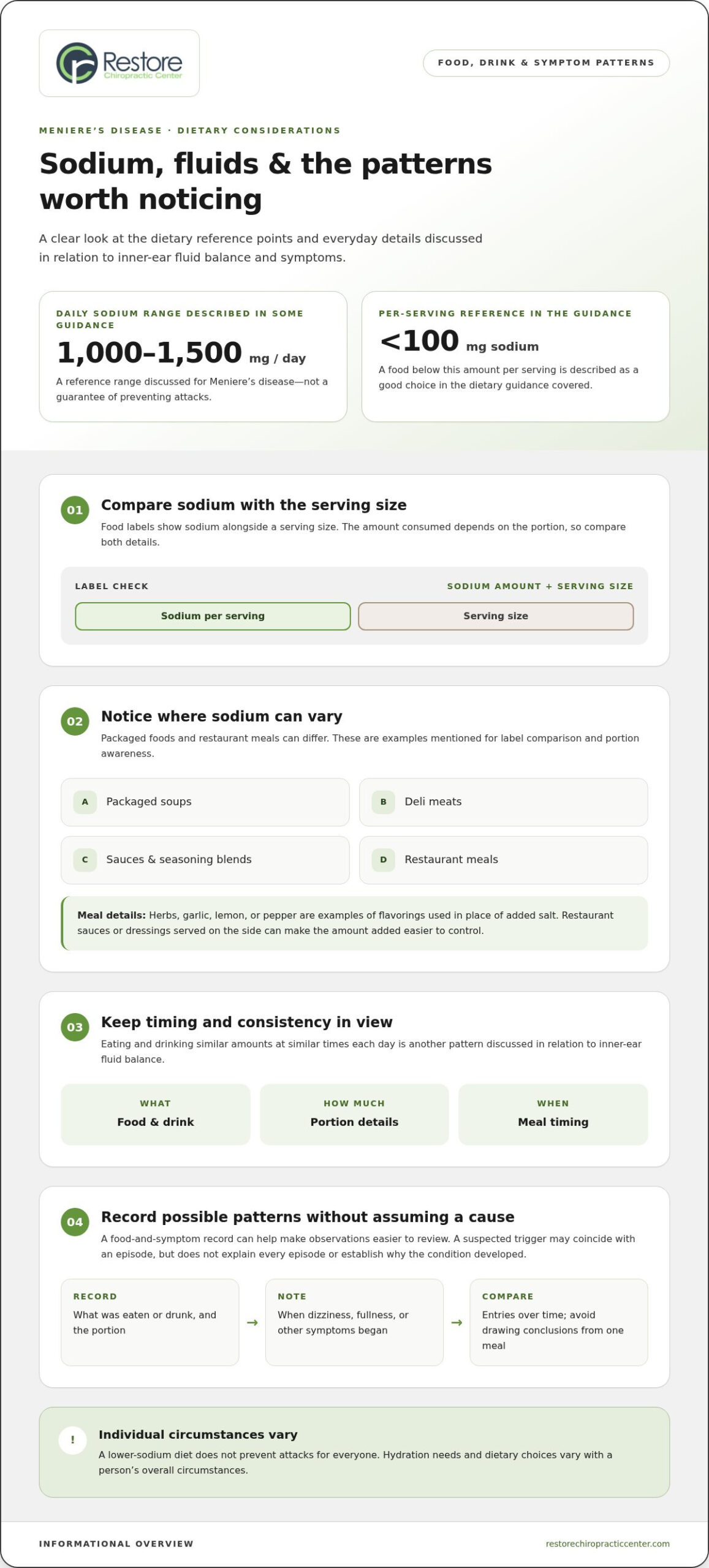
Some guidance for Ménière’s disease describes a daily sodium range of 1000 to 1500 mg. Food labels make sodium amounts visible for comparison: a serving size and sodium amount appear together, so the amount consumed depends on portions. A food with less than 100 mg of sodium per serving is described as a good choice in the dietary guidance covered here.
For lower-sodium meals, try herbs, garlic, lemon, or pepper in place of added salt. Packaged soups, deli meats, sauces, and seasoning blends can vary in sodium, so compare their labels. Restaurant meals vary too; asking for sauces or dressings on the side lets you control how much you add. These examples show how sodium can differ between meals, without implying one menu suits everyone.
Eating and drinking similar amounts at similar times each day is another pattern discussed in relation to inner-ear fluid balance. Hydration needs and dietary choices vary with a person’s overall circumstances. A food-and-symptom record can show what was eaten and when dizziness or fullness occurred. For more context on vertigo and Meniere’s disease, consider how dietary patterns fit alongside other factors affecting daily symptoms.
3. Possible causes of Meniere’s disease
Ménière’s disease involves changes in the inner ear, but its precise causes aren’t always clear. Excess fluid is associated with the condition, and pressure changes may affect balance and hearing signals. About 10% of Meniere’s disease cases run in families, suggesting inherited factors may contribute for some patients. A family connection, however, doesn’t explain every case or establish what caused one person’s symptoms.
It helps to distinguish a cause from a trigger. A trigger may coincide with an episode, while the reason the disorder developed may remain uncertain. Stress, for example, can be part of a symptom pattern without explaining why inner-ear changes began. Tracking when symptoms occur and what was happening can provide useful details to discuss with a licensed professional.
Are supplements or herbal remedies effective for Ménière’s disease, and what are their risks? Some complementary approaches may help people cope with symptoms, but they are not established cures. Supplements can also cause side effects or interact with medicines, so discuss their ingredients with a healthcare professional.
When should symptoms be assessed by a doctor or emergency service? A doctor can assess recurring spinning, hearing changes, or ear symptoms and discuss evaluations such as a hearing test.
Are there ENT doctors or audiologists who treat Ménière’s disease in Council Bluffs, Iowa? ENT doctors and audiologists focus on hearing and balance concerns; local practice availability varies. A licensed professional can explain how hearing and balance assessments relate to an individual’s symptoms.
Understanding possible causes can help frame questions about symptoms and care options. For information about chiropractic care related to vertigo and Ménière’s disease, explore this overview of natural care.
Restore Chiropractic Center: Upper cervical chiropractic
Restore Chiropractic Center offers upper cervical chiropractic for people exploring natural care options for vertigo and Ménière’s disease. Its Knee Chest Upper Cervical care includes chiropractic exams and evaluations to understand each person’s health concerns and nervous system function. During a first-visit consultation, you can discuss your symptoms and questions and consider whether this approach aligns with your goals.
Chiropractic care is distinct from medical evaluation of Ménière’s disease, hearing changes, or inner-ear concerns, and does not replace care from licensed medical professionals. Understanding what each type of care addresses can help you make informed health decisions.
For information about upper cervical chiropractic and Meniere’s disease, visit Restore Chiropractic Center online.
Choose a thoughtful next step
Unpredictable symptoms can make planning difficult. Decide what you most want help understanding, such as how vertigo affects your daily routine or which care options fit your priorities. If you’re exploring natural remedies for Meniere’s disease in Council Bluffs, base your questions on your own experience and discuss them with qualified health professionals involved in your care.
Restore Chiropractic Center can explain its approach and help you understand whether its services align with your interests. You can contact Restore Chiropractic Center to learn more. Taking an informed step at a pace that feels manageable can help you move forward with greater clarity and confidence.
Frequently Asked Questions
What is Meniere’s Disease?
Ménière’s disease is an inner-ear disorder that can cause vertigo, hearing loss, tinnitus, and ear fullness. Symptoms may affect one ear first and change over time. A hearing test and discussion of symptom history help a doctor evaluate whether the pattern fits Ménière’s disease or another vestibular condition. Keeping notes about hearing changes and spinning sensations can make that discussion more specific.
Should I make any changes to my diet to help my vestibular condition?
Diet changes may be worth discussing if you notice symptoms alongside particular meals or eating patterns. Instead of removing several foods at once, record what you ate, the portion, and when symptoms appeared. This can help distinguish a recurring association from a one-time coincidence. A healthcare professional can consider your overall dietary needs when discussing possible changes.
Where can I get further information and support?
For hearing or balance concerns, a licensed healthcare professional can provide medical evaluation and discuss appropriate support. If you’re exploring natural remedies for Meniere’s disease in Council Bluffs, you can also learn about Restore Chiropractic Center’s upper cervical care. The center serves Omaha, Ralston, La Vista, Boys Town, Bellevue, Papillion, St. Columbans, Carter Lake, Council Bluffs, and Offutt Air Force Base.
Will caffeine or alcohol impact my vestibular condition?
Caffeine and alcohol may worsen vestibular symptoms for some people, but they don’t establish the cause of Ménière’s disease. If dizziness or spinning seems to follow a particular drink, note the amount and timing alongside other symptoms. A recurring pattern is useful context to share with a licensed healthcare professional, especially if you notice changes in hearing or balance.
Will salt have an effect on my vestibular condition?
Salt contains sodium, which is one factor discussed in relation to inner-ear fluid balance in Ménière’s disease. There is no single dietary target that fits everyone. Before making a substantial change, discuss your health needs and current medicines with a healthcare professional so your dietary choices fit your broader care.
Disclaimer
The information in this article is provided for educational purposes only and is not intended to diagnose, treat, cure, or prevent any condition. It should not replace professional medical advice. Always seek the guidance of a qualified healthcare provider with any questions regarding your health.


