

Vertigo can feel like spinning, swaying, or a shift in your balance, and similar sensations can have different causes. The knee chest technique for vertigo refers to an upper cervical chiropractic approach. It is different from a repositioning maneuver used for certain cases of benign paroxysmal positional vertigo (BPPV).
Knowing that distinction can help you ask more focused questions about care. This article explains the difference between Knee Chest Upper Cervical Chiropractic Care and BPPV repositioning maneuvers, what the chiropractic approach focuses on, and what an initial consultation at Restore Chiropractic Center in Ralston may involve. The clinic’s first visit includes a health-history review and comprehensive examination, with physical or neurological assessments and digital X-rays when indicated.
What Does Vertigo Feel Like, and Why Can Its Causes Differ?
A sudden spinning sensation or the feeling that the floor is shifting can be unsettling, especially when it affects walking or balance. Vertigo describes the feeling that you or your surroundings are moving when they aren’t. It is a symptom, not a diagnosis, and the sensation alone doesn’t identify its cause. The overview of Vertigo describes how this experience can have different causes and forms.
One example is benign paroxysmal positional vertigo (BPPV), which can occur when tiny calcium particles shift into a part of the inner ear and disrupt movement signals. But BPPV is not the explanation for every person’s dizziness or spinning. Other inner-ear conditions, including Ménière’s disease and labyrinthitis, can also affect balance. Similar sensations do not necessarily point to the same underlying issue.
How can inner-ear and balance-system issues relate to spinning?
The inner ear is part of the vestibular system, which helps the brain interpret head movement and position. It works alongside information from the eyes and body to help coordinate balance. You can picture these as several routes carrying signals to a central hub. If one source sends information that differs from another, the brain may perceive movement or instability. That general explanation cannot identify the cause of an individual’s symptoms.
Because possible causes differ, the vertigo and Ménière’s disease page discusses conditions connected with these concerns. The knee chest technique for vertigo is a chiropractic approach, not a diagnostic test for the cause of spinning. Keeping the symptom, its possible cause, and the care approach distinct can make it easier to discuss your concerns.
How Is Knee Chest Care Different from BPPV Repositioning Maneuvers?
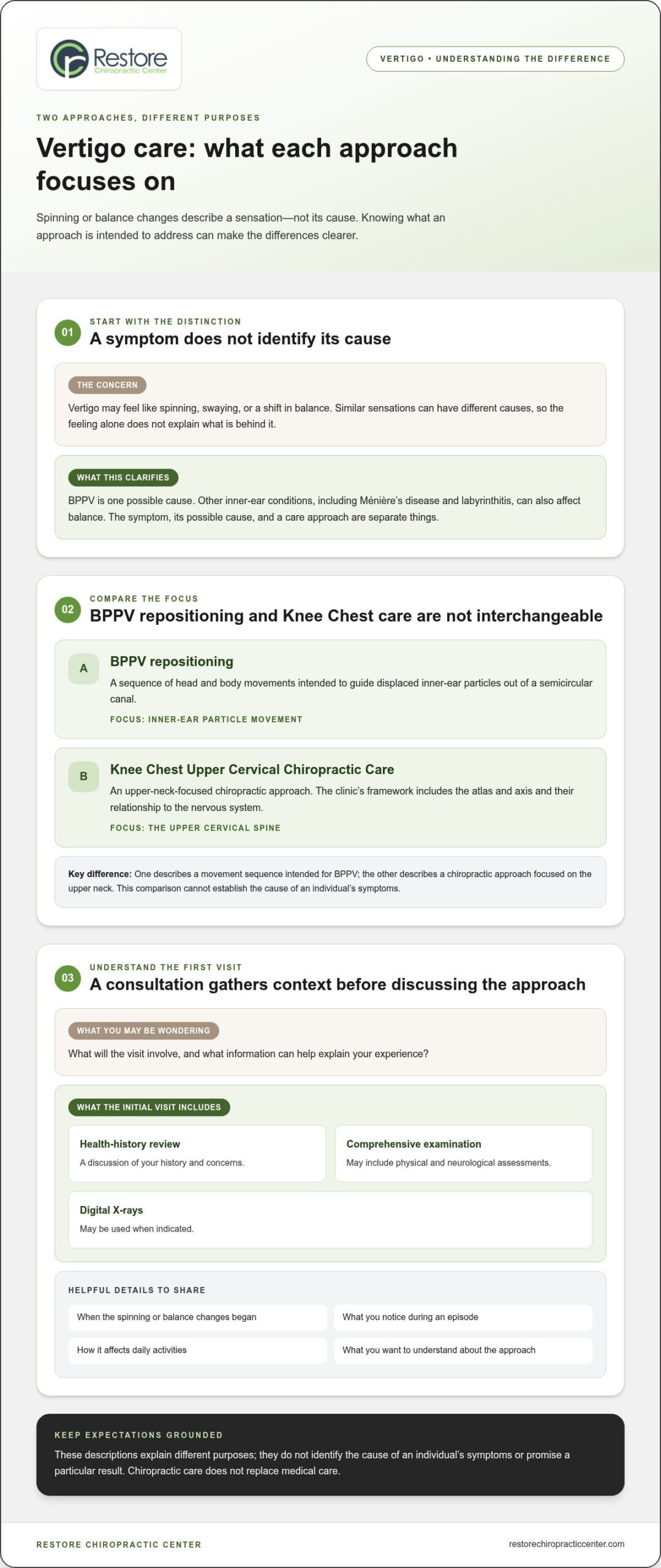
These approaches have different focuses and are not interchangeable. A BPPV repositioning procedure uses a sequence of head and body movements intended to guide displaced inner-ear particles out of a semicircular canal. Knee Chest care is an upper cervical chiropractic approach focused on the upper neck. Comparing their purposes can help clarify what each approach is intended to address, but it cannot determine the cause of anyone’s symptoms.
BPPV repositioning: A sequence of head and body movements intended to guide displaced inner-ear particles out of a semicircular canal.
Knee Chest Upper Cervical care: Chiropractic care focused on the upper neck, including the atlas and axis, within the clinic’s approach to the relationship between the upper cervical spine and nervous system.
Is Knee Chest Chiropractic the same as an Epley maneuver?
No. The Epley maneuver is a specific movement sequence associated with BPPV and canalith repositioning. Knee Chest care is a chiropractic approach focused on the upper cervical spine. The methods and purposes differ, so one should not be described as another name for the other. This comparison also cannot establish whether BPPV or another cause explains a person’s symptoms.
At Restore Chiropractic Center, the upper cervical approach focuses on the atlas and axis as part of the clinic’s care framework. That focus describes the clinic’s approach; it does not establish that a spinal issue is causing vertigo or guarantee that care will resolve it. The phrase “knee chest technique for vertigo” can refer to this chiropractic approach, but it should not be confused with a maneuver intended specifically for BPPV.
Restore Chiropractic Center provides care for vertigo and Ménière’s disease. The vertigo and Ménière’s disease care page offers related information. During a consultation and examination, you can describe your symptoms, ask how the clinic evaluates care options, and learn more about its upper cervical approach.
What Can You Expect When Exploring Vertigo Care in the Omaha Area?
Exploring care starts with a conversation, not an assumption about what is causing your symptoms. At Restore Chiropractic Center, an initial visit includes a consultation and comprehensive chiropractic examination. To make that conversation specific, note when the spinning or balance changes began, what you notice during an episode, how it affects daily activities, and what you want to understand about the knee chest technique for vertigo. These details give the clinic useful context for discussing its approach.
What happens during an initial consultation at Restore Chiropractic Center?
The first visit includes a review of your health history and a discussion of your concerns. The examination may include physical and neurological assessments. Digital X-rays may also be used when indicated. These steps help the team understand your health picture and explain how its upper cervical approach relates to your care discussion.
The visit gives you an opportunity to understand the process and share information; it does not promise a particular result. Individual care discussions do not guarantee that vertigo symptoms will change, and chiropractic care does not replace medical care. The approaches described in this article have different purposes, and reading about them cannot identify the cause of your symptoms.
Restore Chiropractic Center is at 8318 Lakeview St., Ralston, NE 68127, serving the Omaha area, including Ralston, La Vista, Boys Town, Bellevue, Papillion, St. Columbans, Carter Lake, Council Bluffs, and Offutt Air Force Base. Explore the first-visit information to learn about the consultation and consider which questions to bring. You can also review the clinic’s vertigo and Ménière’s disease care information and visit Restore Chiropractic Center to learn more.
Take a Clear, Informed Next Step
When spinning or balance changes leave you uncertain, understanding an approach’s purpose and limits can make the next conversation more manageable. The phrase knee chest technique for vertigo describes a chiropractic approach, not a diagnosis or a promise of symptom relief. If you are considering it, useful questions include what the clinic’s examination involves, how the approach focuses on the upper cervical spine, and how the discussion relates to your symptoms and other care.
Writing down when symptoms occur, how they feel, and how they affect daily activities can help you explain your experience during a consultation. A clear conversation can help you understand the clinic’s care framework and whether it aligns with your interests, while keeping expectations grounded.
Request an appointment with Restore Chiropractic Center to discuss Knee Chest Chiropractic Care, serving patients in Ralston and the Omaha metro area.
Frequently Asked Questions
Is vertigo always caused by BPPV?
No. BPPV is one possible cause, but other balance-system or health factors may also contribute to vertigo-like sensations. Details such as whether symptoms tend to follow a particular movement can help a qualified professional understand your experience, but they cannot identify the cause on their own. The next step depends on your circumstances and an individual assessment.
Can vertigo happen without the room seeming to spin?
Yes. People use “vertigo” to describe different sensations, and a spinning room is not the only way balance concerns can feel. Someone might notice a sense of movement, unsteadiness, or difficulty feeling stable while standing. These experiences can have different explanations, so describing what you feel provides useful context, but the sensation alone cannot establish its cause.
Is Knee Chest Chiropractic the same as the Epley maneuver?
No. The Epley maneuver is a movement sequence associated with repositioning inner-ear canaliths in certain BPPV cases. Knee Chest Chiropractic Care focuses on the upper cervical spine, including the atlas and axis. The knee chest technique for vertigo is a different approach, not another name for the Epley maneuver. This distinction does not determine which care is appropriate for you.
What may happen at a first visit for vertigo concerns?
A first visit at Restore Chiropractic Center includes a consultation, health-history review, discussion of your symptoms, and a comprehensive examination. Physical or neurological assessments and digital X-rays may be used when indicated. The clinic’s team can explain its approach and discuss an individualized care plan without guaranteeing a particular result. The Ralston clinic serves Omaha, La Vista, Boys Town, Bellevue, Papillion, St. Columbans, Carter Lake, Council Bluffs, and Offutt Air Force Base.
Disclaimer
The information in this article is provided for educational purposes only and is not intended to diagnose, treat, cure, or prevent any condition. It should not replace professional medical advice. Always seek the guidance of a qualified healthcare provider with any questions regarding your health.


