

Persistent symptoms after a concussion deserve careful assessment, not guesswork. A concussion recovery chiropractor in Ralston may assess neck function, physical signs, and nervous system responses as part of supportive care for symptoms such as headaches, dizziness, or fatigue. Concussion symptoms can overlap with other concerns, so their context matters.
It can be frustrating when symptoms linger or make everyday activities feel harder. You’ll learn how chiropractic care may fit into a broader approach to post-concussion symptoms, and why an individual assessment matters more than assuming one approach suits everyone.
We’ll explain what a chiropractic evaluation and neurological assessment may involve, what the findings can clarify, and how to understand the role of upper cervical care alongside appropriate medical care.
Can a Chiropractor Help with Post-Concussion Syndrome?
Chiropractic care may support neck-related concerns after a concussion, but it does not replace concussion assessment or broader medical care. It may address neck pain, whiplash, and cervical function after an accident or other head injury.
Coordinating Recovery Care
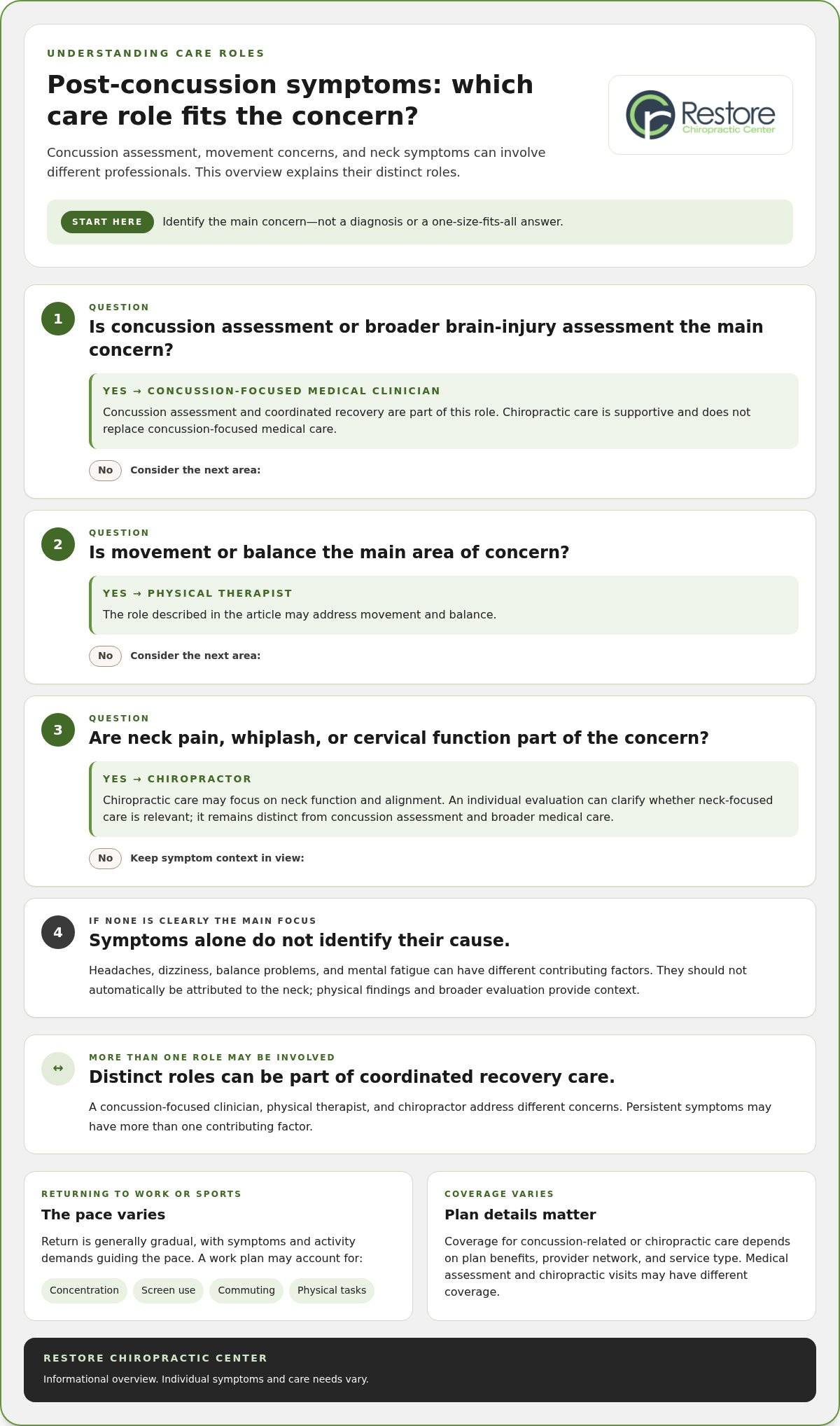
A concussion clinic may focus on concussion assessment and coordinated recovery, while a physical therapist may address movement and balance. Chiropractic care may focus on neck function and alignment. In Ralston, these professionals have distinct roles, and care may involve more than one. Persistent headaches, dizziness, or mental fatigue can have different contributing factors, so they should not automatically be attributed to the neck.
Neck manipulation isn’t automatically appropriate after a concussion. Assessment helps establish whether cervical care is relevant; if C1 and C2 care is considered, the approach described is gentle and slow, without sudden, sharp movements. Chiropractic care is supportive and distinct from concussion-focused medical care.
People in Ralston may consider concussion-focused medical clinicians, physical therapists, and chiropractors for different recovery needs. The appropriate professional depends on whether the concern involves concussion assessment, movement, or neck symptoms.
Insurance coverage for concussion-related or chiropractic care depends on plan benefits, provider network, and service type. Coverage may differ between medical assessment and chiropractic visits.
Recovery and Return to Activities
Concussion recovery varies with the injury and changing symptoms, so there is no single timeline for everyone. Returning to work or sports is generally gradual, with symptoms and activity demands guiding the pace. A return-to-work plan may account for concentration, screen use, commuting, and physical tasks. Chiropractic care may address relevant neck concerns, while concussion recovery and activity planning remain part of coordinated care.
Common concussion symptoms
Concussion symptoms can affect physical function, balance, and thinking after a sports collision, fall, or other injury. Symptoms may not appear immediately, so it is important to notice changes over time.
Headache, Balance, and Cognitive Symptoms
Headaches, dizziness, and balance problems can make everyday tasks difficult, such as reading, walking through a busy space, or concentrating in class. Cognitive symptoms may include trouble focusing, memory changes, or feeling mentally slowed. Symptoms vary between people and can change during recovery.
Neck pain or whiplash may occur alongside a concussion, especially after an accident that jolts the head and cervical spine. Neck-related problems can contribute to headaches or dizziness for some people, but those symptoms can also have other causes. A physical assessment can help distinguish neck concerns from symptoms that need broader evaluation. Physical therapy and exercises may be part of care when appropriate.
Symptom Onset and Assessment
Symptoms can take a day or two to appear after a head injury. For example, someone may feel well after a sports collision, then notice a headache or difficulty concentrating the next day. Symptoms can change over time, so an initial impression may not capture the full effect of an injury.
The SCAT5 is a structured tool used to help identify whether a concussion has occurred. It includes symptom and cognitive checks, such as attention and memory tasks. It contributes information to an assessment; it does not explain every possible cause of persistent symptoms. An overview of concussion-related care can help readers understand how symptoms are considered alongside physical and neurological findings.
Chiropractic assessment and neurological testing
A chiropractic evaluation considers how neck and spinal function relate to reported concussion symptoms. It may include health history, physical assessment, and neurological checks. A concussion recovery chiropractor in Ralston can assess neck-related concerns as supportive care, while concussion diagnosis and broader brain injury assessment remain medical matters. This distinction helps place neck pain and muscle tension in context.
During an evaluation, a practitioner may review symptom patterns and assess posture, neck movement, balance, coordination, and muscle responses. These observations describe physical function, but they do not explain every headache or dizzy spell. If findings point to a neck concern, they can help determine whether gentle upper cervical care is appropriate. For someone considering a concussion recovery chiropractor in Ralston, an evaluation can clarify the focus of chiropractic care. Spinal adjustments do not replace concussion-focused medical care.
One reported case tracked SCAT5 scores over an assessment period: the symptom count fell from 15 to 3, while symptom severity decreased from 53 to 5. These measurements came from one patient, not a normal benchmark or a prediction for others. Scores describe symptoms and cognitive function, but can’t establish by themselves that an injury has resolved.
A useful assessment considers several areas together, including headaches, neck mobility, balance, and concentration. Neurological and physical findings can help shape a customized chiropractic care plan around relevant neck concerns. Explore the clinic’s concussion assessment and care to understand how evaluations can fit into supportive care.
In the same patient’s recorded course, the SCAT5 symptom severity score was 38 on 30/01/20, and the SCAT5 symptom count was 7 on 27/02/20. These are individual observations and should be interpreted alongside clinical assessment, rather than as a measure of recovery on their own.
Restore Chiropractic Center: Upper cervical chiropractic
Restore Chiropractic Center provides upper cervical chiropractic for people exploring neck-focused support alongside concussion recovery. Its knee chest upper cervical approach is considered through an individual chiropractic exam and evaluation, rather than assumed to suit every situation.
A first-visit consultation gives you time to discuss your symptoms, injury history, and questions. An evaluation can help clarify whether chiropractic care is relevant to neck concerns, while concussion assessment and broader medical care remain important parts of recovery. It can be a useful next step if neck discomfort or tension continues to affect daily activities.
For information about an evaluation, contact Restore Chiropractic Center.
Take a thoughtful next step
Moving forward can start with a clear conversation about how symptoms affect your daily life and what support you’re seeking. A concussion recovery chiropractor in Ralston may be relevant when neck concerns are part of the picture, while concussion-related medical care remains important. The right next step considers your symptoms and overall health without assuming every approach suits every person.
Restore Chiropractic Center provides upper cervical chiropractic, including knee chest upper cervical, along with chiropractic exams and evaluations. These services offer a way to discuss neck function and consider whether chiropractic care may have a role in your wider care plan. Reach out to arrange a first-visit consultation and share what you’ve been experiencing.
Contact Restore Chiropractic Center to begin that conversation at your own pace.
Frequently Asked Questions
What are the recommended steps for concussion recovery?
Concussion recovery commonly involves professional assessment, attention to changing symptoms, and a gradual return to everyday demands. A recovery plan may account for sleep, screen use, concentration, school or work tasks, and physical activity. For example, someone returning to desk work may need to consider how sustained reading affects concentration. The pace and support vary with each person’s symptoms and circumstances.
Can a chiropractor help with concussion symptoms, and what evidence supports it?
Chiropractic care may address neck-related concerns that occur alongside concussion symptoms, but it does not establish or resolve a concussion diagnosis. Published evidence includes individual case reports, which describe one person’s experience but cannot show that chiropractic care caused a change or will have the same effect for others. More research is needed to clarify its role in post-concussion care.
When should someone see a doctor after a concussion?
Medical professionals assess suspected concussions and head injuries by considering symptoms, injury circumstances, and changes over time. An evaluation may be especially relevant when symptoms affect everyday activities, such as following a conversation or completing schoolwork. A clinician’s assessment can help distinguish concussion concerns from other possible causes. The appropriate timing and follow-up depend on the person’s situation.
What care may be considered for persistent post-concussion symptoms?
Persistent post-concussion symptoms can involve different concerns, so care may be organized around the specific difficulties a person experiences. For example, balance challenges, concentration changes, and neck discomfort may call for distinct forms of professional attention. Chiropractic care may be considered for neck-related concerns within a broader care plan. The professionals involved and the focus of care depend on symptoms and assessment findings.
Which concussion specialists and chiropractors serve Ralston, Nebraska?
The article identifies concussion clinics for concussion assessment, physical therapists for movement and balance, and chiropractors for neck function. Restore Chiropractic Center provides upper cervical chiropractic in Ralston.
Disclaimer
The information in this article is provided for educational purposes only and is not intended to diagnose, treat, cure, or prevent any condition. It should not replace professional medical advice. Always seek the guidance of a qualified healthcare provider with any questions regarding your health.


