

Hand neuropathy can have many possible causes, including diabetes, injury, infection, and certain medications; more than 100 types of neuropathy are recognized. Burning, tingling, numbness, or weakness in the hands can be part of the picture, but these symptoms alone don’t identify the cause.
If you’re noticing neuropathy symptoms in your hands, a chiropractor in Bellevue may be one professional to discuss care options with as part of a broader evaluation. Prickling, burning, or numbness can interfere with everyday tasks, so it’s natural to want clear answers.
This article explains how hand symptoms may feel, why they can occur, and what to expect when discussing upper cervical chiropractic care. It also outlines how an examination can help inform whether this approach may suit your situation.
What Causes Neuropathy?
Numbness, tingling, or burning in the hands can arise from nerve damage linked to diabetes, injury, infection, or other conditions. The cause matters because peripheral neuropathy describes a range of nerve problems, not one single condition.
Diabetes and Systemic Causes
Diabetes can damage nerves over time, particularly when blood sugar remains high. Diabetic neuropathy may affect multiple nerves and commonly involves the legs and feet, but it can also affect the hands. Other possible contributors include autoimmune disorders, infections, poor nutrition, and certain medications. This is why symptoms should be considered alongside your health history, rather than treated as an isolated sensation.
Causes of Hand Numbness and Tingling
Pressure or injury affecting one nerve can cause symptoms in a particular area. Carpal tunnel syndrome is one example; Bell’s palsy is another condition associated with an affected nerve. Peripheral neuropathy may also cause prickling, numbness, burning pain, or muscle weakness in the hands. Because the nervous system carries messages between the brain, spinal cord, and body, changes in sensation can have different origins. The location and pattern of symptoms can help guide an evaluation, but cannot establish a cause on their own.
Peripheral Neuropathy Types and Causes
There are more than 100 types of neuropathy. Peripheral neuropathy may be acquired through diabetes, infection, injury, poor nutrition, or other disease, and some forms are hereditary. Long-term alcohol abuse can also damage nerves. In idiopathic neuropathy, the cause remains unidentified despite extensive testing in up to a third of cases. This range helps explain why the path to relief or therapy depends on identifying the underlying factors, rather than assuming every case follows the same route. Peripheral neuropathy care is one option readers may explore in that context.
If You Have Peripheral Neuropathy, What Care and Relief Options Can You Consider?
Peripheral neuropathy is a broad term, so care discussions depend on the underlying condition and symptoms. An assessment can consider whether spinal pressure may be a factor, while recognizing that nerve symptoms can have other causes.
Understanding Neuropathy as a Nerve Disease Term
Neuropathy describes conditions involving damaged or diseased nerves that carry messages between the brain, spinal cord, and body. Hand numbness or tingling can have different origins, and the term alone does not identify which nerves are affected or why. The symptom pattern, health history, and possible causes are factors in considering care options, including whether chiropractic care is appropriate to consider.
Chiropractic Adjustments and Nerve Function
Chiropractors assess spinal and other physical factors that may place pressure on nerves. Adjustments are intended to address those mechanical factors, not to address nerve disease itself or guarantee changes in nerve function. The potential risks of neck or spinal manipulation depend on the person’s health and the procedure proposed. Relevant history, the approach, possible risks, and alternatives can be part of a discussion before care begins.
Everyday habits may also be part of a broader discussion of nerve health. Regular movement, nutrition, smoking, and alcohol use can be considered alongside symptoms and health history. Medication use is another factor in a person’s overall health context; chiropractic care does not replace medication management.
Hand numbness, tingling, or burning that persists, recurs, changes, or affects daily activities can be part of the overall picture when considering possible causes and whether further assessment is appropriate.
Insurance coverage for chiropractic care in Bellevue depends on the individual plan and its terms. Coverage varies, so the policy’s benefit details determine whether a particular service is covered.
Neuropathy symptoms, including burning pain and tingling
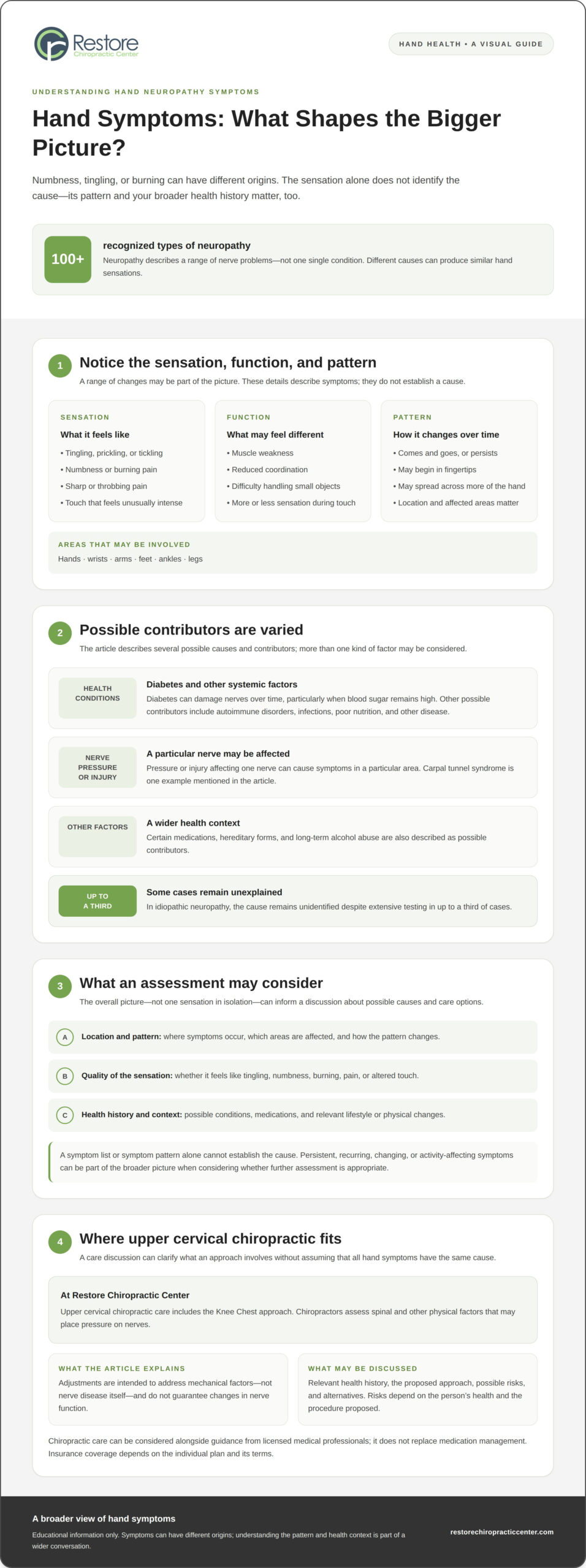
Hand neuropathy can affect sensation in different ways. Some people describe tingling, prickling, or tickling; others notice numbness or burning pain. Pain may feel sharp or throbbing, and light touch may feel unusually intense. Sensations can come and go or persist, but their character alone does not identify the cause.
Peripheral neuropathy can affect the hands, wrists, arms, feet, ankles, and legs. Symptoms may begin in the hands or feet and spread inward. For instance, someone might first notice pins and needles in the fingertips, then later feel numbness across more of the hand. During an assessment, the practitioner considers the pattern and affected areas as part of the overall picture.
Nerve damage can affect physical function as well as sensation. Muscle weakness, reduced coordination, or difficulty handling small objects may occur alongside burning or tingling. Some people become highly sensitive to touch; others notice less sensation during ordinary contact. These differences reflect how affected nerves influence sensory messages and movement.
Symptoms can vary with the underlying disease or other causes, so a symptom list cannot determine what is happening. A professional assessment considers the location, quality, and pattern of the feeling, along with relevant health history. Lifestyle and physical changes may also be discussed as part of understanding the broader picture. Learn about how hand symptoms may be assessed.
Restore Chiropractic Center: Natural care for peripheral neuropathy
Restore Chiropractic Center provides natural care for peripheral neuropathy through upper cervical chiropractic, including the knee chest approach. A consultation can focus on your hand symptoms, concerns, and what this chiropractic care involves. The aim is to explain the option without assuming everyone’s symptoms have the same cause.
Chiropractic care can be considered alongside guidance from licensed medical professionals. If you’re weighing options for hand neuropathy, a consultation can help clarify whether this approach fits your care considerations.
For a conversation about natural care for peripheral neuropathy, contact Restore Chiropractic Center.
Take a Thoughtful Next Step for Your Hand Health
Understanding your symptoms can make care discussions more focused. If you’re exploring neuropathy symptoms in the hands with a chiropractor in Bellevue, consider what you want to learn, such as how an evaluation works or what upper cervical care involves. Restore Chiropractic Center provides chiropractic examinations and evaluations, along with upper cervical care using the knee chest approach. These visits offer an opportunity to discuss your concerns and understand whether this care fits your situation. It can also be considered alongside care from your other licensed health professionals.
You don’t need to have every answer before starting that conversation. A clear explanation of the process can help you decide what feels like a suitable next step. Contact Restore Chiropractic Center to begin a conversation about your options, and move forward with greater understanding.
Frequently Asked Questions
How do you stop neuropathy from progressing?
There is no single way to stop neuropathy from progressing; the approach depends on its cause. Diabetes-related nerve problems differ from symptoms linked to injury, infection, or another condition. A licensed medical professional can assess contributing factors and discuss appropriate options. Identifying the cause matters because chiropractic care addresses spinal or physical factors, not every disease that can damage nerves.
Does neuropathy go away?
Neuropathy symptoms may improve, persist, or change over time; they do not always go away. The outlook depends on the cause and extent of nerve damage, and symptoms linked to different conditions can follow different courses. An evaluation can help clarify possible causes and expectations. Chiropractic care does not guarantee that neuropathy or hand symptoms will resolve.
How Does Upper Cervical Chiropractic Care Help Neuropathy?
Upper cervical chiropractic can assess whether spinal factors may be relevant to nerve pressure, but it does not directly reverse nerve damage or cure neuropathy. If you’re considering a chiropractor in Bellevue for neuropathy symptoms in your hands, an examination can inform a discussion about whether this care is suitable. Restore Chiropractic Center serves people in Omaha, Ralston, La Vista, Boys Town, Bellevue, Papillion, St. Columbans, Carter Lake, Council Bluffs, and near Offutt Air Force Base.
How does a chiropractor assess which type of neuropathy a patient has and determine if chiropractic care is suitable?
A chiropractor can review symptom patterns and health history, then conduct physical and neurological assessments. Digital X-rays may be included when indicated. These steps can help assess whether spinal factors are relevant and whether chiropractic care may be suitable. They do not identify every disease that can cause neuropathy, so findings may need to be considered alongside assessments by other licensed medical professionals.
Is there a specific duration or number of sessions at which neuropathy improves plateau?
There is no set duration or number of sessions that determines when neuropathy symptoms will improve or level off. The course depends on factors such as the cause, symptom severity, and how long symptoms have been present. Assessments can track changes in pain, numbness, and hand function over time. Symptom courses vary from person to person; one schedule does not fit everyone.
Disclaimer
The information in this article is provided for educational purposes only and is not intended to diagnose, treat, cure, or prevent any condition. It should not replace professional medical advice. Always seek the guidance of a qualified healthcare provider with any questions regarding your health.


