

A drop in barometric pressure may aggravate existing neck discomfort, but weather itself doesn’t create a spinal problem. The connection between barometric pressure and neck pain may involve changes in sensitive tissues, while cold, damp conditions can also contribute to muscle tension.
If your headaches seem to arrive with a change in the weather, it makes sense to wonder whether your neck is involved. Some headaches start in the neck and may affect one side of the head or feel worse when you move your neck, although weather-related headaches can have other causes too.
This article explains what barometric pressure is, why a drop in pressure may relate to neck pain, and what clues can help distinguish a neck-related headache from other weather-related headaches. You’ll also learn which everyday factors may add to neck strain and how an upper cervical chiropractic evaluation can explore the relationship between your symptoms, spinal function, and nervous system.
Is my neck the reason for my weather headaches?
Weather shifts can coincide with headaches and neck stiffness, but timing alone doesn’t show what causes the symptoms. The pattern, including how symptoms relate to neck movement and temperature changes, offers useful context.
Headache and Neck Symptoms During Weather Changes
Weather-related headaches may occur alongside neck stiffness or muscle tension as pressure, temperature, or humidity shifts. Some patients notice pain that worsens with neck movement; cervicogenic headaches often affect one side. This pattern matters because a neck source is one possible explanation, but a headache that arrives with changing weather doesn’t identify its cause.
Chronic Conditions Linked to Weather-Related Pain
Arthritis, migraines, chronic headaches, back or neck pain, post-surgical pain, and old injuries may be associated with weather-related discomfort. Chronic pain can make nerves more sensitive, so a shift in temperature or humidity may make familiar symptoms more noticeable. Weather changes may aggravate an existing condition rather than create the underlying problem, an important distinction when tracking recurring pain.
Weather-Sensitive Neck Conditions
Neck conditions may be weather-sensitive when tissues or muscles are already irritated. Cervical spine wear, facet-joint arthritis, disc problems, nerve irritation, and past whiplash can contribute to neck-origin headaches; pressure shifts may coincide with episodes for some people. Pain on one side that worsens with neck movement is one clue, though that pattern alone can’t establish a diagnosis.
Support for Pressure-Related Neck Pain
Options depend on the cause and may include gentle warmth or comfortable movement; a licensed professional can discuss approaches such as physical therapy. To track possible triggers, log headache and neck symptoms alongside daily weather, pressure changes, and temperature. Weather-linked symptoms alone don’t define urgency; a licensed professional considers the full symptom pattern. Barometric pressure differs from blood pressure, which is covered in this high blood pressure overview.
What Is Barometric Pressure and Why Does It Matter?
Barometric pressure is the weight of air pressing on Earth. A drop may coincide with changes in how sensitive joints and tissues feel.
Pressure Effects on Tissues, Joints, and Nerves
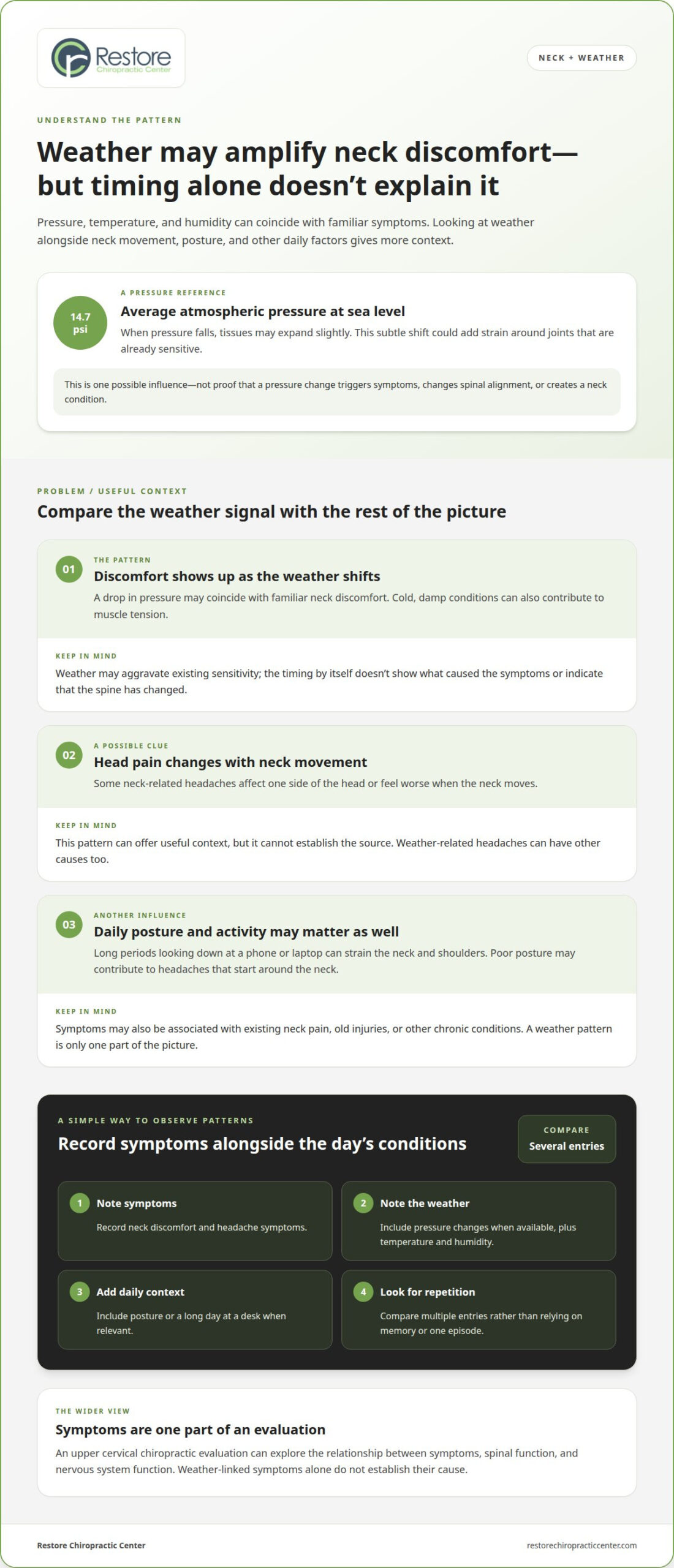
At sea level, average atmospheric pressure is 14.7 pounds per square inch. When pressure falls, tissues may expand slightly, a subtle shift that could add strain around already sensitive joints. In the cervical spine, surrounding muscles and nerves may contribute to how stiffness or discomfort is perceived.
That doesn’t mean a weather shift changes spinal alignment or creates a neck condition. Instead, pressure is one possible influence among existing tissue sensitivity, muscle tension, and other factors. If symptoms seem to follow a forecast change, noting the timing can help distinguish a recurring pattern from an isolated episode.
Joint Fluid Expansion and Related Symptoms
One proposed explanation for weather-related joint discomfort is that pressure changes allow gas bubbles to expand, affecting the fluid that lubricates joints. The fluid may then press against the joint capsule, the surrounding structure, and contribute to pain or stiffness. This is a possible mechanism, not proof that every pressure shift triggers symptoms.
Joint aches and brain fog may occur during the same weather episode, but the fluid-expansion explanation doesn’t establish why someone feels mentally foggy. These symptoms can have different influences. For example, someone might notice joint stiffness during a pressure drop while also feeling less focused. Recording each separately can clarify whether they follow the same pattern.
Low barometric pressure and neck pain
Low barometric pressure often arrives with cold, damp weather and may coincide with increased neck discomfort. The shift itself doesn’t show that spinal alignment has changed. Instead, pressure, temperature, and humidity can overlap with existing sensitivity in muscles, joints, or nerves, making familiar symptoms more noticeable.
For example, someone with an old neck injury may notice stiffness on a stormy day, then feel less discomfort as conditions change. That pattern is worth observing, but weather isn’t the only possible influence. Long hours looking down at a phone or laptop can strain the neck and shoulders, while poor posture may contribute to headaches that start around the neck.
Pressure shifts may also coincide with migraines or other headaches, but a weather pattern cannot establish their source. Cervicogenic headaches can relate to neck issues, including prior injury or changes in cervical joints. If head pain worsens with neck movement, that detail may help a licensed professional assess the full symptom picture, including nerves and spinal function.
To understand your own patterns, record neck discomfort, headache symptoms, posture, and the day’s weather together. Note pressure changes if available, as well as temperature and humidity. Comparing several entries can show whether symptoms tend to follow a particular shift or occur after a long day at a desk. This offers a clearer picture than relying on memory alone.
Weather may be one part of the picture, not a complete explanation for neck pain. To explore how upper cervical care considers spinal function alongside symptoms, learn about upper cervical chiropractic care.
Restore Chiropractic Center: Natural care for fibromyalgia and chronic pain
Restore Chiropractic Center provides upper cervical chiropractic care and natural care for fibromyalgia and chronic pain. If you’re exploring whether recurring neck discomfort and headaches relate to your overall health, a chiropractic examination and evaluation can assess spinal function and symptoms as part of a customized care plan.
Restore Chiropractic Center provides knee-chest upper cervical care, focusing on the upper neck and its relationship to nervous system function. This is an option to discuss when weather changes seem to coincide with persistent discomfort, though a pattern alone doesn’t establish its cause. Chiropractic care can complement, but not replace, guidance from other licensed health professionals.
If you’d like to discuss whether an evaluation fits your concerns, contact Restore Chiropractic Center.
Let your symptom pattern guide your next step
A weather-linked pattern can be a useful starting point, not a complete explanation. Noticing when discomfort appears, what else is happening in your day, and how symptoms change can help you describe your experience clearly. Those observations can support a focused conversation about barometric pressure and neck pain without assuming the forecast explains every symptom.
If headaches or neck discomfort disrupt your daily routine, an evaluation can help put your observations in context. Details such as whether movement affects the pain, sleep is interrupted, or certain activities become difficult can make the conversation more specific. Your broader health history also matters, as chronic strain often coexists with other personal wellness issues—for example, those also managing stress-related shedding or thinning can seek guidance from specialized providers like The Hair Clinic to explore therapeutic restoration.
Contact Restore Chiropractic Center to discuss your concerns and possible next steps. A clearer understanding of your symptoms can be a steady beginning.
Frequently Asked Questions
Can upper cervical care make me less sensitive to the weather?
Upper cervical chiropractic evaluates the relationship between the upper neck, spinal function, and the nervous system. It provides a way to discuss recurring symptoms and explore whether neck function is relevant to your concerns. A weather pattern alone doesn’t show what is driving sensitivity, and care shouldn’t be understood as a guaranteed way to change how your body responds to weather.
Is Your Weather Sensitivity Coming From Your Neck?
Neck involvement is one possibility, not something weather sensitivity can establish by itself. Notice whether a headache begins with neck discomfort, changes with neck movement, or follows activities such as working at a computer. For example, pain that builds after desk work may follow a different pattern from symptoms that occur during a weather shift without being affected by neck movement.
What Chronic Pain Conditions Are Most Impacted by Weather Changes?
Weather-related discomfort has been associated with arthritis, fibromyalgia, chronic headaches, neck or back pain, and symptoms linked to old injuries or post-surgical pain. People’s experiences differ. Someone with fibromyalgia, for example, may notice a change in widespread discomfort, while someone with arthritis may focus on joint stiffness. These patterns describe reported experiences, not a way to identify a condition.
What can I do on high-risk weather days?
On a day when weather shifts tend to coincide with symptoms, note how you feel and what you were doing. Keeping a simple record alongside the forecast may reveal useful patterns over time. General comfort measures include dressing in layers during cold weather, maintaining regular sleep, drinking fluids, and taking breaks from prolonged hunching over a phone or laptop.
What can aggravate cervicogenic headaches?
Long stretches at a desk, slouched posture, and looking down at a phone can add strain around the neck and shoulders. Stomach sleeping may also place the neck in an awkward position, while a prior neck injury can be relevant context. For example, track whether a headache follows hours at a screen or occurs after a neck movement, then share that pattern with a licensed professional.
Disclaimer
The information in this article is provided for educational purposes only and is not intended to diagnose, treat, cure, or prevent any condition. It should not replace professional medical advice. Always seek the guidance of a qualified healthcare provider with any questions regarding your health.


