

Post-concussion headaches can occur with neck pain or reduced movement. A concussion chiropractor in Omaha may assess cervical symptoms as part of understanding your concerns. Chiropractic care focuses on the neck and spine; it does not diagnose a concussion or replace medical evaluation.
Lingering headaches can be frustrating, especially when stiffness, dizziness, or sensitivity disrupts daily routines. This guide explains how chiropractic care may fit alongside medical care for post-concussion symptoms, what a neck examination can assess, and what to expect from an evaluation. It also describes how upper cervical chiropractic care considers the relationship between the neck, nervous system, and symptoms, helping you prepare questions for a qualified healthcare professional.
Can chiropractic care help with post-concussion headaches?
Chiropractic care may assess neck symptoms that accompany post-concussion headaches, but it does not diagnose a brain injury or replace medical evaluation. The focus is on symptoms and cervical spine function.
Post-Concussion Symptoms and Rehabilitation
Headaches can occur alongside neck stiffness, dizziness, tinnitus, sleep changes, or irritability after a head injury. Omaha Clinic notes that post-concussion effects can persist for months. A rehabilitation assessment can document symptoms, neck movement, tenderness, and balance-related concerns, then clarify how chiropractic care may fit alongside medical care. Learn more about concussion care in Omaha.
Gentle Techniques and Treatment Planning
After a head injury, any care plan should reflect examination findings, symptoms, and relevant medical assessments. A neck examination may assess range of motion, muscle tightness, spasms, weakness, and pain. A gentle technique is not automatically appropriate; first, the evaluation should clarify what your body can tolerate and what options may be suitable.
After a motor vehicle collision, the head’s backward-and-forward movement can cause whiplash. Prompt assessment can document the injury history, headache, neck movement, and tender areas. Clear records help describe symptoms and examination findings related to the collision.
Does insurance cover chiropractic care for concussion in Nebraska? Coverage depends on your policy, chiropractic benefits, and claim requirements. Review your plan’s terms to understand what applies.
Is chiropractic care safe after a concussion, and what are the risks? Safety depends on the injury and examination findings, so cervical techniques are not suitable for everyone. A chiropractic evaluation does not replace medical assessment. Care planning may also consider daily activities and ways to avoid further neck strain while symptoms are evaluated.
Cervical spine examination and cervicovestibular care
A cervical spine evaluation considers neck movement alongside balance-related symptoms. The findings can help you frame questions for conversations with healthcare providers.
An examination may note neck mobility and whether head turns bring on discomfort or dizziness. Cervicovestibular care considers possible overlap between neck symptoms and balance concerns; it doesn’t diagnose a concussion. The concussion care information explains the chiropractic focus.
For Omaha athletes, coordination between a chiropractor and medical providers can clarify each provider’s role. For example, sports-related neck discomfort can be discussed alongside medical evaluation findings without assuming one explains the other.
How do Omaha concussion clinics compare with chiropractic offices? Their roles and evaluation scopes may differ. A concussion chiropractor in Omaha focuses on chiropractic assessment, while medical providers evaluate concussion concerns.
Which Omaha chiropractors see patients after a concussion? A concussion chiropractor in Omaha can explain whether an evaluation considers neck and balance symptoms. You can also review the practitioner’s stated credentials and experience.
What evidence supports chiropractic care for concussion recovery? A chiropractic examination can describe cervical symptoms, but those findings alone do not show changes in brain injury recovery. Keeping these questions separate helps clarify what an assessment can address.
What should patients discuss during an evaluation? Describe symptoms that affect everyday activities, such as turning your head while driving, to make the conversation specific. You can also ask what the examination covers.
How can you find a licensed chiropractor in Omaha with concussion experience? Review the practitioner’s credentials and stated experience, then ask what the evaluation covers. This can help you decide whether the chiropractic scope fits your questions.
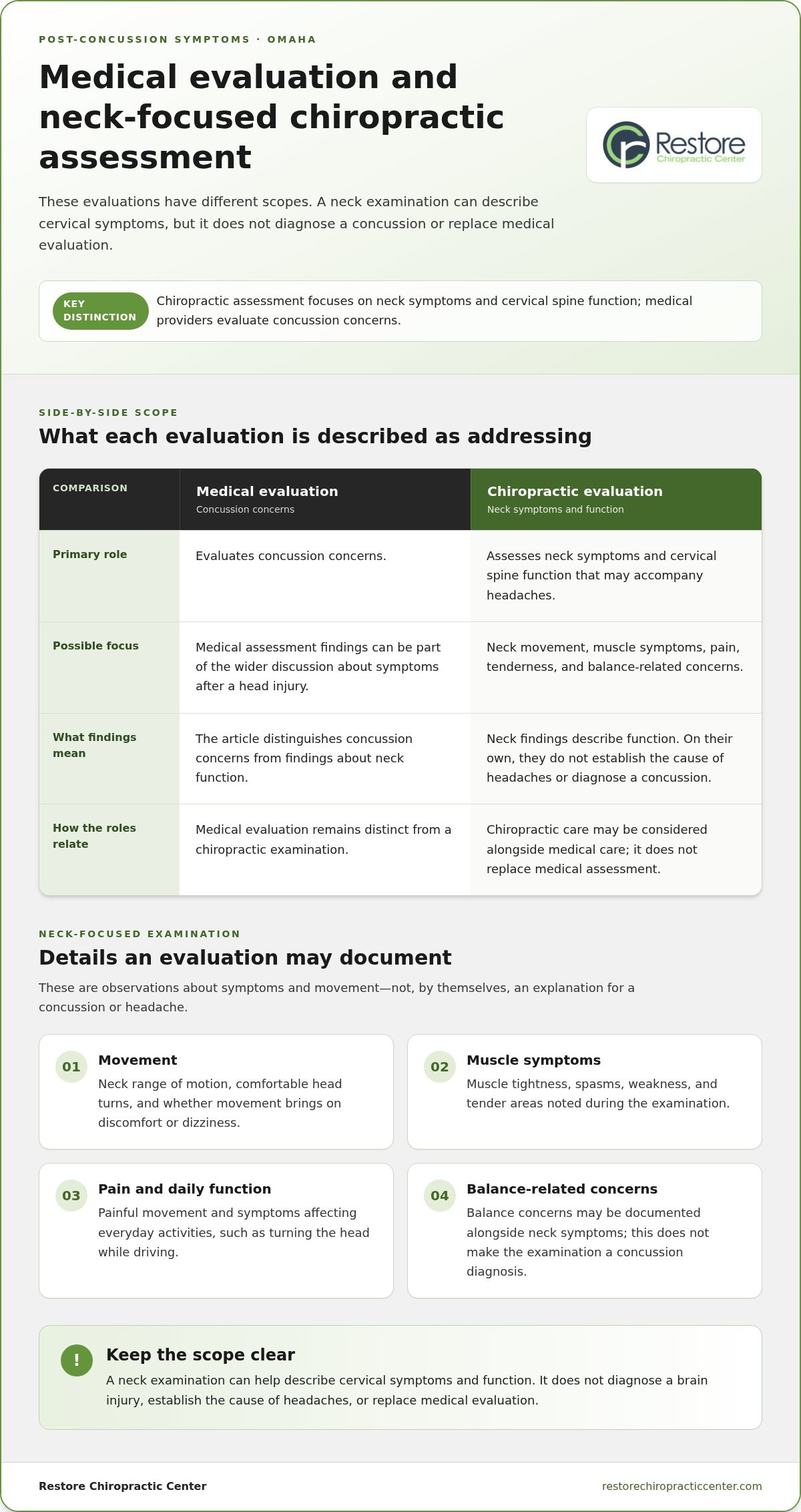
Neck range of motion, muscle spasms, weakness, and pain
A neck evaluation can document movement, muscle symptoms, and pain after a head injury. These findings describe function but do not establish the cause of headaches.
Neck-Related Pain and Headaches
After an accident, headaches may occur alongside neck pain or stiffness. An assessment can compare comfortable head turns and note muscle spasms, weakness, and painful movement. These observations describe cervical spine function and provide context for discussing symptoms with medical providers. They do not, by themselves, show that a neck issue caused a concussion or headache syndrome.
Spinal and Neck Alignment
Chiropractic care may assess spinal movement and alignment during an examination. “Proper alignment” should not be treated as a guaranteed explanation for pain or a measure of healing. Useful details are specific findings, such as which movements feel restricted and whether the neck or back is tender. A specialized evaluation should explain what it assesses and how the findings relate to your symptoms.
Back and neck pain can occur together after a collision, so an examination may consider both areas. For example, you might report pain when turning your head and soreness across your upper back. Recording these concerns gives a clearer picture of daily function. A discussion of chiropractic care can then focus on relevant findings, your concerns, and coordination with medical care.
To discuss a cervical spine examination and neck symptoms, request an evaluation.
During the acute phase of whiplash, headaches and difficulty turning the head comfortably may occur. Chiropractic Health Clinic in Omaha says its concussion care includes cervical spine adjustments intended to restore alignment.
Restore Chiropractic Center: Upper cervical chiropractic
Restore Chiropractic Center offers upper cervical chiropractic for people considering chiropractic care alongside medical evaluation for concussion-related symptoms. Its knee chest upper cervical approach focuses on the upper neck. Chiropractic exams and evaluations assess physical and neurological findings relevant to your concerns.
A first-visit consultation gives you an opportunity to discuss symptoms such as headaches, neck discomfort, or dizziness and learn what an examination involves. If the findings suggest chiropractic care may be relevant, the next discussion can clarify its scope and how it fits alongside care from medical providers. Chiropractic care does not replace medical assessment or diagnose a concussion.
For information about upper cervical care and next steps, visit Restore Chiropractic Center online.
Take a thoughtful next step
Lingering symptoms after a concussion can make it difficult to know which care option fits your needs. A conversation with a concussion chiropractor in Omaha can explain what a chiropractic evaluation considers and how it may fit alongside medical care. Symptoms and circumstances vary, so chiropractic care may not be appropriate in every situation.
Restore Chiropractic Center offers upper cervical chiropractic, including knee chest upper cervical care, along with chiropractic exams and evaluations. You can discuss neck-related concerns and learn what an examination involves, while keeping chiropractic care distinct from medical guidance.
If you’d like to explore whether an evaluation aligns with your concerns, contact Restore Chiropractic Center. A clear next step can begin with a simple conversation and questions that help you feel informed.
Frequently Asked Questions
How Is It Diagnosed?
A medical professional assesses a concussion; a chiropractic examination does not diagnose one. Medical evaluation considers the injury and reported symptoms. A chiropractic exam can document physical or neurological findings, such as neck movement, but cannot determine whether a brain injury occurred. This distinction clarifies each provider’s role in your care.
How soon after a concussion should I start care?
The timing of a chiropractic evaluation depends on the injury history, current symptoms, and medical findings. Chiropractic care is not a substitute for medical assessment of a suspected concussion. For example, if you have headaches and neck stiffness, you can discuss each concern with your medical provider and chiropractor so that each evaluation stays within its scope.
What If Symptoms Don’t Go Away?
Persistent symptoms deserve continued attention from qualified healthcare professionals. The Omaha clinic notes that post-concussion effects can last for months. Keep a clear record of changes, including whether headaches, dizziness, or sleep difficulties continue, to describe your experience during follow-up discussions. A chiropractic evaluation may address neck-related findings, but it does not explain every ongoing symptom.
What Is a Concussion?
A concussion is a mild traumatic brain injury caused by a blow or jolt that disrupts normal brain function. Symptoms may not appear immediately and can emerge days after the injury. For instance, someone may first notice a headache or trouble concentrating after a fall or sports impact. A medical professional can assess concerns about a possible concussion.
Will you crack my neck if I’ve had a head injury?
A neck adjustment should not be assumed or promised based only on a history of head injury. Before hands-on chiropractic care, discuss the injury, your current symptoms, and any concerns about neck movement or cracking. Ask the chiropractor to explain the examination and any proposed technique. This conversation helps you understand the options and make an informed decision.
Disclaimer
The information in this article is provided for educational purposes only and is not intended to diagnose, treat, cure, or prevent any condition. It should not replace professional medical advice. Always seek the guidance of a qualified healthcare provider with any questions regarding your health.


