

The name describes the patient’s position. In the knee chest upper cervical technique, the patient kneels on a padded cushion and rests their chest on a specialized adjustment table. The table supports the knees, chest, and head while the practitioner positions the head and neck for an adjustment.
It’s understandable to wonder what that position means and whether symptoms such as headaches, migraines, vertigo, or fatigue point to an atlas concern. Symptoms alone can’t establish whether an atlas adjustment is appropriate. This article explains the name and positioning, what practitioners may assess when considering the upper neck, and how education in Knee Chest Upper Cervical care developed. You’ll also learn how an evaluation can bring together health history, physical and neurological assessments, and imaging to inform care.
Why is it Called Knee Chest Upper Cervical?
The name comes from the patient’s position before an adjustment: they kneel on a padded cushion and rest their chest on a specialized table. Supports hold the knees, chest, and head, allowing the practitioner to position the head and neck. This setup focuses on the upper cervical spine, the top of the neck. Practitioners may assess posture, imaging, and possible misalignments when considering upper cervical care and nervous system function. In this approach, the term subluxation may describe an alignment concern.
What evidence supports the knee-chest upper cervical technique? The Knee Chest Society says its care practices are based on current research and clinical evidence. That statement describes the approach’s foundation, but it does not establish that an adjustment will resolve a particular symptom.
What are the risks and side effects? Descriptions of this adjustment include a quick push and sometimes an audible release of gas from a joint. Some people with sensitive systems may find the force too stimulating, so comfort and the intensity of the adjustment are relevant considerations.
Before an adjustment, a practitioner may review health history and imaging, then use postural or neurological assessments to inform positioning. During the adjustment, the patient kneels and rests their chest on the table while the practitioner positions the head and neck. A person may notice movement or hear a sound, but experiences vary. Afterward, the practitioner may use imaging to assess the correction. Compared with lighter adjustment approaches, Knee Chest positioning and pressure can feel distinct. “Gentle” does not mean everyone experiences the same sensations.
How do you know if you need atlas correction?
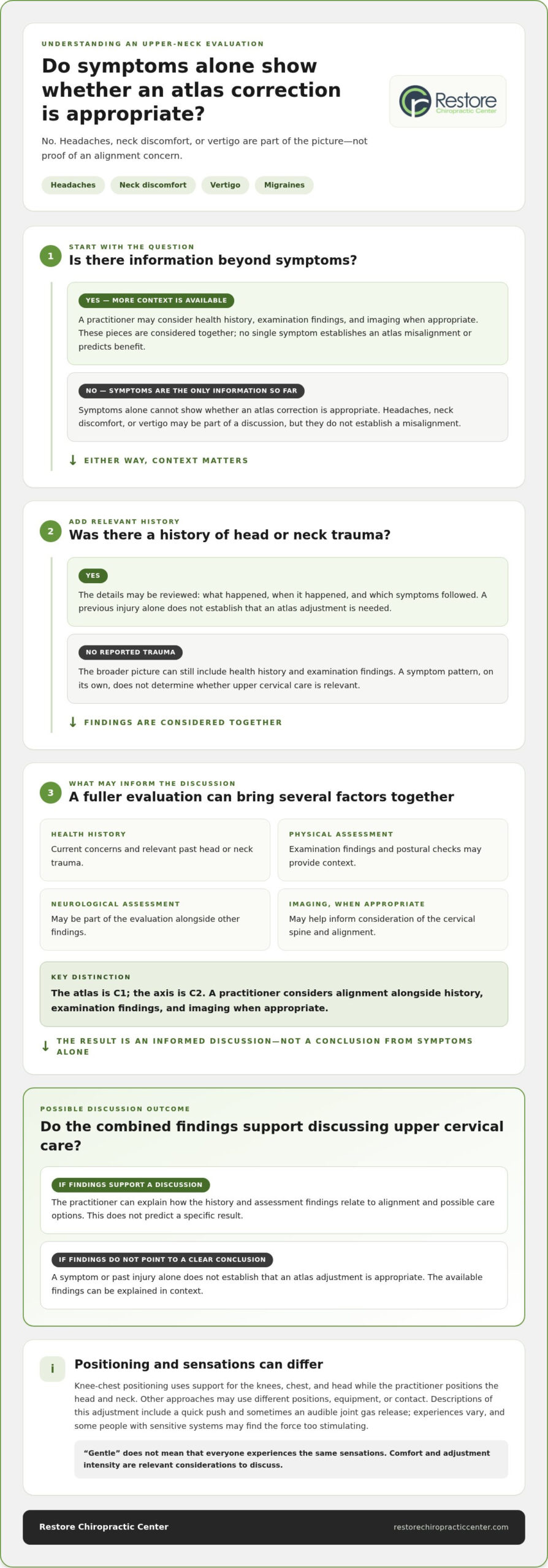
Symptoms alone cannot show whether an atlas correction is appropriate. The atlas, or C1, and the axis, or C2, are the top two neck vertebrae. A practitioner considers their alignment alongside a person’s history, examination findings, and, when appropriate, imaging. Headaches, neck discomfort, or vertigo may be part of that discussion, but they don’t establish a misalignment or predict a benefit.
After neck trauma, the details matter: what happened, when it happened, and which symptoms followed. A practitioner may review that history and consider examination findings and imaging before discussing upper cervical care. This assessment helps distinguish a symptom pattern from findings that may support a particular correction. A previous injury alone doesn’t establish that an atlas adjustment is needed.
How does the knee-chest upper cervical technique compare with other chiropractic methods? It focuses on a supported knee-chest position and a specific upper-neck adjustment, while other approaches may use different patient positions, equipment, or contact. Atlas-focused methods can also differ in how they assess alignment and guide an adjustment. A method’s name alone doesn’t show which approach is right for a person.
Some upper cervical approaches use a table section that drops beneath the head with light, quick pressure. Others may involve different positioning or hands-on contact. In the knee-chest approach, the practitioner positions the head and neck before the adjustment. These differences can affect what a person feels, so “gentle” doesn’t mean every method feels the same. No adjustment should be assumed to suit every nervous system.
A doctor’s assessment may include health history, physical or neurological checks, and imaging. For readers learning about this process, upper cervical chiropractic evaluations can help explain how findings inform a discussion of alignment and possible next steps.
Knee Chest Upper Cervical Chiropractic education
Upper cervical chiropractic education focuses on the relationship between the upper neck and nervous system. The approach considers alignment in the cervical spine, while recognizing that symptoms alone don’t establish a spinal concern. For patients, this distinction matters: a headache or episode of vertigo is a reason to share relevant history, not proof of a specific finding.
The first official seminar for this system began in Atlanta, Georgia, in November, 2001. Its early gatherings included twenty to thirty doctors and students. That history shows how formal education around Knee Chest Upper Cervical care took shape. It doesn’t, by itself, establish that a specific adjustment benefits every person.
Education also involves understanding how assessment informs a chiropractor’s decisions. An initial consultation may include questions about current concerns and past head or neck trauma. Physical and neurological assessments, postural checks, and imaging can provide information about the cervical spine. Together, these steps help the chiropractor consider findings in context rather than treating one symptom as a stand-alone sign.
Who should avoid knee-chest upper cervical chiropractic care? No single symptom or history detail identifies everyone who should avoid it. A person with prior neck or head trauma, or current health concerns, can share those details during an evaluation. Their history and assessment findings help inform whether this approach is appropriate.
For a practical overview of the evaluation process, explore what a first-visit consultation includes.
A chiropractor trained in the Knee Chest Upper Cervical Technique can help determine whether it suits a patient’s needs. The technique uses a specialized table that supports the knees, chest, and head, with the head and neck positioned before the adjustment.
Restore Chiropractic Center: Upper cervical chiropractic
Restore Chiropractic Center provides upper cervical chiropractic, including Knee Chest Upper Cervical care, for people seeking an informed evaluation of neck-related concerns. If headaches, migraines, or vertigo have prompted questions about the upper neck, a chiropractic exam can help assess whether this approach is relevant to your situation.
An initial consultation may include a review of your health history, neurological and physical assessments, and digital X-rays when appropriate. These steps help the practitioner consider your individual findings and explain how the evaluation relates to upper cervical care. You can ask about positioning, the adjustment process, and what the assessment does or doesn’t indicate.
To discuss an evaluation or arrange a first-visit consultation, contact Restore Chiropractic Center.
Take a Thoughtful Next Step
Understanding the knee chest upper cervical technique can help you have a clearer conversation about concerns involving your neck and nervous system. Symptoms such as recurring headaches or vertigo are only part of the picture. An individual evaluation considers your history and assessment findings before discussing care options.
Restore Chiropractic Center offers upper cervical chiropractic, including Knee Chest Upper Cervical care, along with chiropractic exams and evaluations. These services provide a setting to discuss your concerns, learn what an assessment involves, and ask questions about whether this approach aligns with your needs. If you’re ready to continue that conversation, contact Restore Chiropractic Center. Taking an informed step at your own pace can make the path ahead feel clearer.
Frequently Asked Questions
How does Knee Chest Chiropractic Care work?
Knee Chest Chiropractic care is an assessment-led approach focused on the upper neck. A practitioner considers a person’s health history and examination findings before discussing whether this approach is relevant. An adjustment is one part of a broader evaluation, not a stand-alone explanation for symptoms such as headaches or dizziness.
Who can benefit from Upper Cervical Chiropractic?
People seeking an evaluation of upper-neck concerns alongside migraines, headaches, or vertigo may explore upper cervical chiropractic. Symptoms alone don’t show whether this care is suitable or predict a particular benefit. Residents of Omaha, Ralston, La Vista, Boys Town, Bellevue, Papillion, St. Columbans, Carter Lake, Council Bluffs, and near Offutt Air Force Base can learn about local care at Restore Chiropractic Center.
Does it Matter Which Upper Cervical Technique You Choose?
Yes. Practitioner positioning, assessment methods, and adjustment approaches can differ, shaping the appointment experience. A technique’s name alone doesn’t establish the right fit. Relevant considerations include a person’s health history, examination findings, comfort with the setup, and the practitioner’s training in that approach. Clear communication before an adjustment can help patients understand what to expect.
Is the adjustment painful?
People can experience an adjustment differently. Descriptions of Knee Chest adjustments include quick pressure; some people may hear a joint sound or notice movement near the top of the spine. A sound doesn’t measure benefit. Patients can share how they feel and ask the practitioner to explain the adjustment before it begins.
What is a cervical subluxation?
Cervical subluxation is a chiropractic term for an alignment or movement concern in a neck joint. It describes a practitioner’s interpretation of spinal function, not a symptom such as a headache itself. The term alone doesn’t explain what is causing symptoms; practitioners consider it alongside a person’s history and assessment findings.
Disclaimer
The information in this article is provided for educational purposes only and is not intended to diagnose, treat, cure, or prevent any condition. It should not replace professional medical advice. Always seek the guidance of a qualified healthcare provider with any questions regarding your health.


