

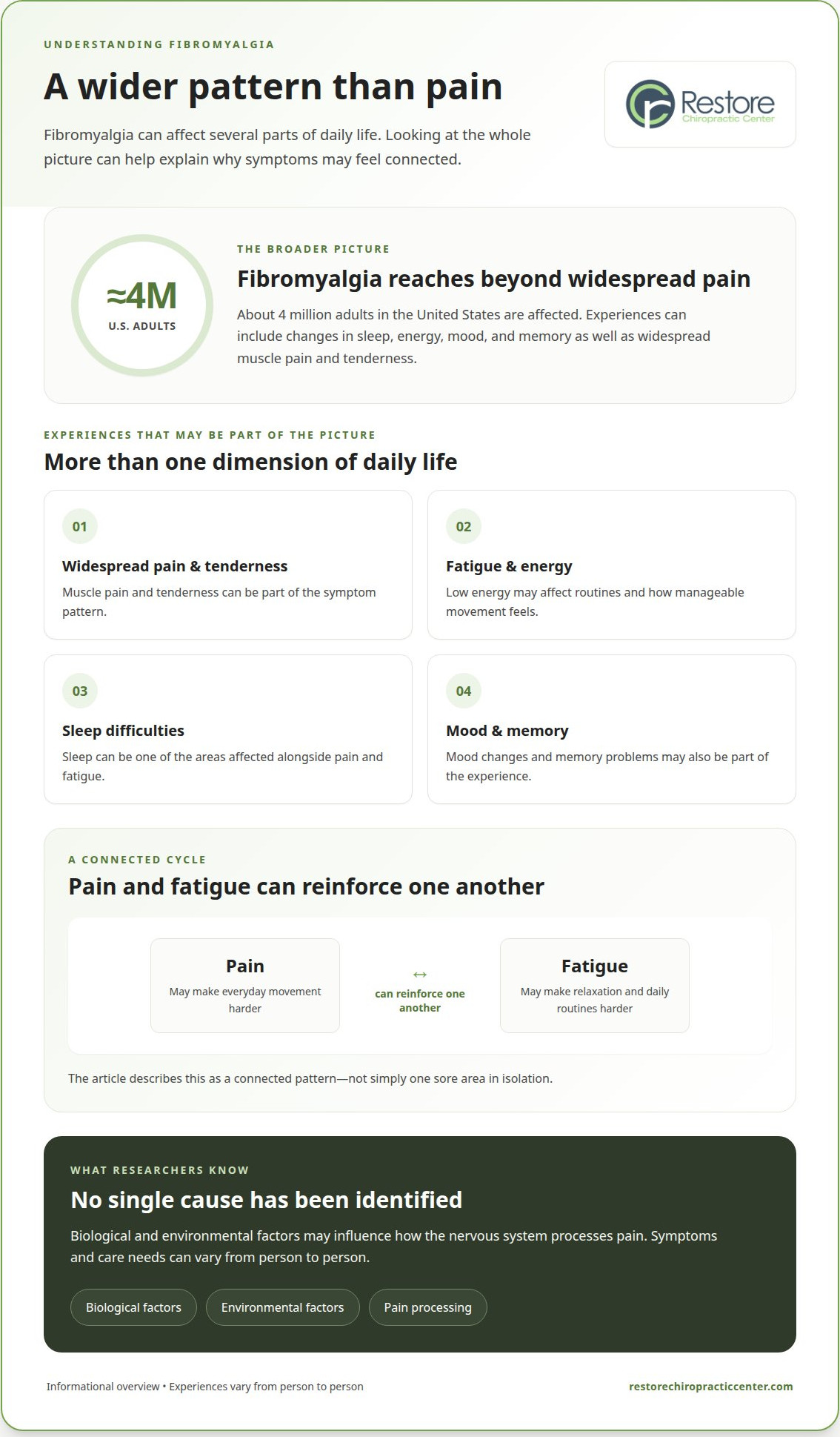
Fibromyalgia involves more than widespread pain: it can also affect sleep, energy, mood, and memory. Because fatigue and pain can intensify one another, alleviating fibromyalgia symptoms often means considering the overall pattern, not just one sore area. Researchers have not identified a single cause; biological and environmental factors may influence how the nervous system processes pain.
It’s understandable to feel discouraged when symptoms disrupt everyday routines. This article explains how fibromyalgia symptoms and possible causes relate to low-impact movement, physical therapy, stress management, and cognitive behavioral therapy (CBT). You’ll learn why pacing activity matters, how gradual exercise and therapist-guided movement may support strength and flexibility, and how CBT can build coping skills for stress, flare-ups, and difficult thoughts. Together, these approaches offer different ways to understand and address fibromyalgia’s challenges.
Low-impact aerobic exercise and physical therapy
Regular aerobic movement may help ease pain and support quality of life. General information about activity includes pacing movement and choosing options suited to a person’s abilities. The fibromyalgia and chronic pain page describes related natural care.
Exercise for Pain and Quality of Life
Exercise is repeated movement that may support stamina, daily function, and quality of life. For some people, activity involves building a manageable routine over time. Movement may initially increase discomfort, so a difficult first experience doesn’t necessarily predict how activity may feel later. Walking, swimming, and cycling are practical examples. Regular, sustainable activity may also build confidence with everyday tasks.
Low-Impact Movement
Low-impact movement involves controlled activity with less jarring force. Examples include walking, water exercise, stationary cycling, yoga, and tai chi. Personal preference, physical ability, health needs, and lifestyle all shape which activities feel manageable. Switching activities can keep movement accessible when fatigue or stiffness changes. Pauses during the day can also help balance activity with rest.
Professional guidance on gradually increasing exercise
Physical therapy uses guided movement to develop strength, flexibility, and stamina. A physical therapist can tailor exercises to stiffness, pain, and changing ability. Gradual activity progression may include easy walking and avoiding overexertion. A doctor can consider other health needs when coordinating exercise. General information about pacing describes balancing activity with rest on days when symptoms vary.
Stress management and cognitive behavioral therapy
Widespread pain, fatigue, and stress can reinforce one another in fibromyalgia. Cognitive behavioral therapy (CBT) focuses on noticing thought patterns and exploring coping responses during difficult moments. Counseling with a professional trained in CBT may provide a space to discuss stressful situations and confidence in daily life. For some people, emotional coping skills are one part of living with fibromyalgia, alongside physical support. Learn about stress and anxiety support as part of understanding this mind-body connection.
Occupational therapy may include exploring ways to adapt everyday tasks and reduce strain. For example, an occupational therapist may discuss changes to a work area or routine. Breaking demanding activities into manageable portions is one way some people approach tasks when fatigue affects the day. Physical therapy may focus on movement and stiffness, while mental health support may address stress triggers and emotional challenges. These options provide different forms of support when fibromyalgia symptoms affect work or home routines.
Warmth may feel soothing for some people. A warm bath, shower, or compress is an option some people consider for relaxation. Heat and cold can feel different from person to person, and comfort and sensitivity may vary. Gentle bodywork such as manual lymphatic drainage massage and acupuncture are also options some people explore in relation to stress, anxiety, or pain. Responses vary, and people may discuss these approaches with a qualified professional.
Cognitive behavioral therapy is one approach people with fibromyalgia may explore for mental and emotional challenges. It can involve discussing stress management, ways of responding to negative thinking patterns, and daily behaviors. Counseling, particularly with a counselor trained in cognitive behavioral therapy, offers a setting to discuss stressful situations and personal confidence. Some people also explore cognitive behavioral therapy in connection with quality of life while living with long-term pain.
Cognitive behavioral therapy is one option people may consider when living with fibromyalgia, including when anxiety or depression is present. Acceptance and commitment therapy, mindfulness-based stress reduction, tai chi, yoga, and acupuncture are other approaches people may explore in relation to sleep, pain, or difficult thoughts and feelings. These options may be discussed as part of a broader conversation about fibromyalgia care.
Fibromyalgia symptoms and possible causes
Fibromyalgia can cause widespread muscle pain and tenderness, fatigue, sleep difficulties, mood changes, and memory problems. Pain and fatigue can reinforce each other, making everyday movement and relaxation harder. Researchers haven’t identified one cause; biological and environmental factors may affect how the nervous system processes pain. In the United States, about 4 million adults are affected. Diagnosis uses clinical criteria, not lab tests or imaging: widespread pain must last at least three months and involve at least four of five body areas.
There’s no specific diet for fibromyalgia. Nutritious foods, including vegetables, fruit, fish, and healthy fats such as olive oil, may support general well-being, but they aren’t a proven cure. Evidence for supplements varies; vitamin D or magnesium may interact with medications.
In the United States, care costs vary by service, location, and insurance plan; coverage also depends on the plan and service. Symptoms and care needs can vary from person to person, and current care may not seem to meet everyone’s needs.
Opioid pain relievers can have possible side effects, dependence, and worsening pain over time. Evidence for many other medicines used for long-term pain is limited, while supplements can interact with medications. Antidepressants may be used for pain or sleep, but choices depend on individual health circumstances. Fibromyalgia is not the same as arthritis, and approaches to its effects vary.
Restore Chiropractic Center: Natural care for fibromyalgia and chronic pain
Restore Chiropractic Center offers natural care for fibromyalgia and chronic pain through upper cervical chiropractic, including the knee chest approach. This may be a relevant option for people exploring chiropractic care alongside other forms of support for ongoing symptoms. An evaluation can help clarify how the practice’s approach relates to a person’s concerns and goals. Chiropractic care does not replace medical care, and people can continue discussing fibromyalgia symptoms and care options with their healthcare professionals.
If you’d like to learn more about this approach, contact Restore Chiropractic Center.
Take a thoughtful next step toward support
Living with fibromyalgia can make planning feel uncertain, but noticing how your body responds can help you have clearer conversations about care. Alleviating fibromyalgia symptoms is a personal process, and chiropractic care is one option to discuss alongside guidance from your healthcare professionals. Restore Chiropractic Center offers chiropractic exams and evaluations to understand your concerns, along with upper cervical chiropractic care using the knee chest approach. These services offer an opportunity to explore whether this natural care option aligns with your needs, without replacing your ongoing medical care.
If you’d like to discuss your concerns and learn about the practice’s approach, contact Restore Chiropractic Center. Each informed step can help you move forward with greater understanding and confidence.
Frequently Asked Questions
What Is Fibromyalgia?
Fibromyalgia is a chronic condition associated with widespread pain and tenderness, often alongside fatigue, sleep difficulties, and changes in mood or memory. Researchers haven’t identified one cause, but biological and environmental factors may affect how the nervous system processes pain. Diagnosis relies on clinical criteria rather than a lab test or imaging result; a clinician considers the pattern and duration of symptoms.
What approaches may help manage fibromyalgia symptoms?
There isn’t one approach that works for everyone. Care may involve movement, cognitive behavioral therapy, sleep support, or medication, depending on a person’s symptoms and health circumstances. These options address different parts of daily life, and healthcare professionals may be involved in coordinating care. For individuals navigating persistent symptoms, specialized evaluation providers such as Sapphire Clinics focus on thorough medical assessments for patients living with long-term pain. Plans and follow-up can vary with individual circumstances.
What types of exercise may help fibromyalgia, and how can a professional support a gradual start?
Walking, swimming, stationary cycling, yoga, and tai chi are examples of low-impact movement. A physical therapist can adapt activity to a person’s abilities and help develop strength, flexibility, and stamina. Individual responses to movement can vary, and discomfort may rise at first.
How can sleep habits and stress management reduce fibromyalgia symptoms?
Cognitive behavioral therapy can help people develop coping strategies for stress, pain flare-ups, and negative thoughts. Breathing awareness or mindfulness may also offer a way to pause during stressful moments. These approaches support coping and well-being; they don’t remove fibromyalgia.
Which medications are FDA-approved or commonly prescribed for fibromyalgia, and what are their side effects?
In the United States, duloxetine, milnacipran, and pregabalin are FDA-approved specifically for fibromyalgia. Amitriptyline or cyclobenzaprine may also be prescribed for pain or sleep. Side effects depend on the medication and the individual. Potential effects and monitoring vary. Opioids carry risks including dependence and worsening pain over time.
Disclaimer
The information in this article is provided for educational purposes only and is not intended to diagnose, treat, cure, or prevent any condition. It should not replace professional medical advice. Always seek the guidance of a qualified healthcare provider with any questions regarding your health.


